Quiet Tone Ingredients, Price and Reviews: Daily Capsule for Hearing Health
"Quiet Tone is a dietary supplement capsule for daily hearing health support."
Use case: Take one capsule every day with a glass of water, 20 to 30 minutes before a meal, and keep the same time each day.
How it works: Nine nutrients with printed amounts, zinc among them, sit beside one 415.5 mg blend of 18 plants and amino acids, such as ashwagandha and L-theanine.
This official website page covers what the panel prints, what the blend holds, how those amounts compare with the doses the research used, what it costs on the official website, what buyers report, and how the 180-day guarantee works.
Free US shipping on 3 & 6 bottles One-time payment, no subscription 180-day money-back guarantee
- One capsule a day
- 30 capsules a bottle
- 9 nutrients with a printed amount
- 415.5 mg blend, 18 members
- 180-day guarantee
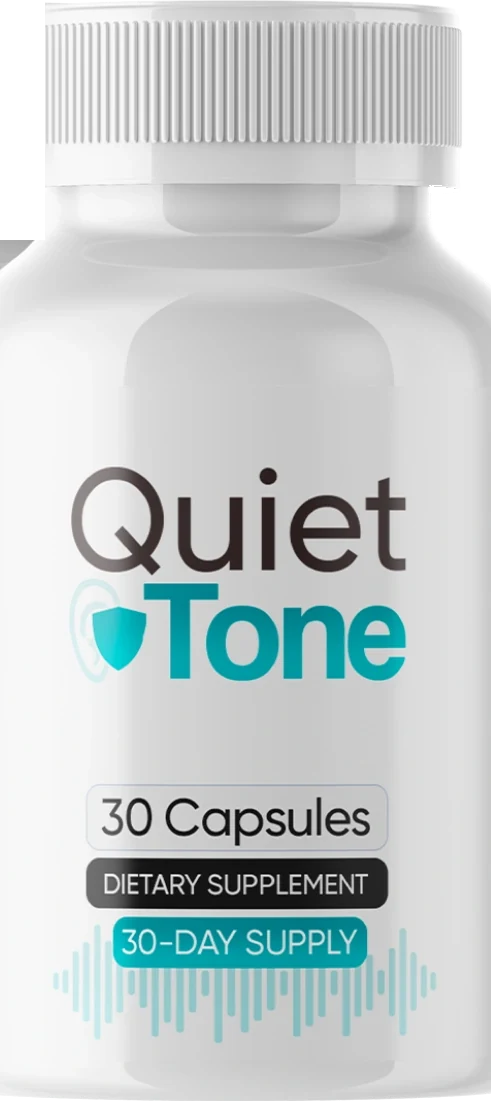
Lot QUI-26/QU-5380 · 30 capsules · one a day
Quiet Tone at a glance: the label in seven lines
Quiet Tone is a vegetable capsule taken once a day, 30 to a bottle. Nine rows show an amount and a percent Daily Value, and one 415.5 mg row holds 18 plants and amino acids. Packs cost $49 to $79 a bottle.
Seven lines that answer most of what a buyer wants before scrolling.
| What the bottle tells you | Detail |
|---|---|
| Form | A vegetable capsule. One a day, 30 to a bottle, so a bottle is a month. |
| Serving | One capsule with an 8 oz glass of water, 20 to 30 minutes before a meal. |
| Nutrients with an amount | 9 rows, each with a milligram figure and a percent Daily Value. Thiamin, riboflavin and biotin are the big ones at 500%, 462% and 500%. |
| The blend | One row, 415.5 mg, holding 18 botanicals and amino acids. The members are named in full with their plant parts; the amounts stay inside the row. |
| What the label claims | Nothing beyond the product name, the count and the routine. There is no structure/function line printed anywhere on the bottle. |
| Other ingredients | Hypromellose, magnesium stearate and silicon dioxide. The hypromellose is the shell, which makes this a vegetable capsule. |
| Price and guarantee | $49 to $79 a bottle depending on the pack, with a 180-day money-back guarantee from the date of purchase. |
Read from the printed label artwork and the seller’s own buy cards on 19 September 2026.
Why people start looking at a daily capsule like Quiet Tone
People look at a daily capsule like Quiet Tone when a ring or hiss in quiet rooms will not go away. The sensible first step is to get hearing measured, because a capsule is not a substitute for a check.
What sends someone looking, and what the field itself puts first.
It usually starts in a quiet room. A high tone, a hiss or a ring that is only there when nothing else is, loudest at bedtime and gone by mid-morning. Tinnitus is common, it is a symptom rather than a disease, and MedlinePlus covers what it is in plain language.
Two facts shape what happens next. The first is that ringing very often travels with hearing loss: a national cohort of veterans is the largest recent look at how tightly the two run together. The second is that the interventions with the strongest evidence behind them are not things you swallow. The 2026 umbrella review of every tinnitus treatment with a meta-analysis and the 2026 Korean practice guideline put sound therapy, hearing devices and structured talking therapies at the front.
So what is a capsule doing in this aisle at all? Honestly: people want something to do between appointments, and a daily routine is the easiest thing in the world to start. That is a real want and it is worth serving well, which means being straight about what a supplement is and is not.
Quiet Tone sits in that space. It is a once-a-day capsule with a readable nutrient panel and a botanical blend, sold by a seller who publishes prices and a long refund window. The rest of this page is about what is in it, what those amounts are next to the research, and what it costs.
What is Quiet Tone? A daily capsule for hearing health support
Quiet Tone is a once-daily capsule in a 30-capsule bottle. The panel has nine nutrients with amounts and percent Daily Values, six B vitamins plus calcium, magnesium and zinc, and one 415.5 mg blend row with 18 names.
The short version, and the one structural thing about this panel worth knowing.
Quiet Tone is a one-capsule-a-day formula in a 30-capsule bottle, which makes a bottle a month at the label dose. The front panel reads “30 Capsules / Dietary Supplement / 30-Day Supply” over a waveform graphic, and the distributor block on the back gives Quiet Tone, PO Box 12730, Ogden, UT 84404. This website is the U.S. stocking partner for it, not the maker.
The Supplement Facts panel has two halves and they behave completely differently. The top half is 9 nutrients, each with a milligram or microgram figure and a percent Daily Value beside it: thiamin, riboflavin, niacin, vitamin B6, biotin, pantothenic acid, calcium, magnesium and zinc.
The bottom half is a single line reading “Proprietary Blend 415.5 mg”, under which 18 botanicals and amino acids are named in full, with binomials and plant parts, and no individual figures. Ashwagandha, chamomile, valerian, lemon balm, passion flower, GABA, L-theanine, bacopa, rhodiola and 5-HTP are all in there.
Both halves are worth reading closely, and this site reads them separately, because one of them can be checked against published doses and the other can only be compared at the level of the whole row. The dosage section does that comparison in one place.
Why buy Quiet Tone from the official website?
Buy Quiet Tone on the official website because the 180-day money-back window and the lot this desk ships both apply to orders placed here. A marketplace seller follows its own returns policy, and free US shipping applies to three and six bottles.
Six practical differences, none of them about the formula itself.
The guarantee belongs to the desk you bought from
The 180-day money-back window is a policy of this desk and the seller behind it. A bottle bought from a marketplace reseller is covered by that reseller's policy, whatever it turns out to be.
Free shipping above two bottles
Three and six-bottle packs ship free inside the United States. The two-bottle pack carries $9.99 shipping, which is worth folding into the per-bottle figure before you compare the three.
Six months to change your mind
180 days is long by any standard in this category, and it is longer than any trial behind any plant in this blend ran for. It is the single most buyer-friendly thing about this offer.
The lot is traceable
Bottles shipped from here carry lot QUI-26/QU-5380 with certificate reference QUI-5380-26-QU. Those are filing references rather than laboratory results, and the batch page is candid about the difference.
One payment, no rolling charge
Each pack is bought once. There is nothing to cancel later, which is the complaint people most often have about supplements sold through a funnel.
The panel is reproduced here in full
The supplement facts page reproduces every row, all 18 blend members with their plant parts, and the other-ingredients line, so you can hold this site against the bottle that arrives rather than taking either on trust.
How does Quiet Tone work?
Quiet Tone combines a floor of nine nutrients with a blend of calming plants and amino acids. Zinc and magnesium are the two nutrients studied for hearing, while the calming group is known from stress and sleep research at its own doses.
Three ideas on one panel, and what the research behind each actually measured.
Three separate ideas are stacked on this panel. Separating them is the only way to read it, because the research behind them points in three different directions.
A B-complex at multivitamin strength
Thiamin, riboflavin, niacin, vitamin B6, biotin and pantothenic acid are the first six rows, and at 500%, 462%, 88%, 236%, 500% and 160% of a Daily Value they are a B-complex in everything but name. These are coenzymes in energy metabolism, which is a nutrition fact rather than a claim about ears. Where individual B vitamins have been studied at effect-sized doses the amounts were far larger: riboflavin's best-known result used 400 mg a day, and the meta-analysis that followed it kept to that scale.
Three minerals, in their cheapest salts
Calcium as carbonate, magnesium as oxide and zinc as oxide, all at 12.5 mg. Zinc is the interesting one: it is the only ingredient on this whole label with a tinnitus trial behind it, and the Cochrane review of oral zinc for tinnitus pooled three trials in 209 adults and found no evidence of benefit. The form matters too, and the isotope study of zinc salts measured oxide at 49.9% absorbed against 61.3% for citrate, with three of fifteen adults absorbing little or none from the oxide. A 2024 review reaches the same ranking.
Eighteen botanicals and amino acids in one blend
This is where the bulk of the plant material sits, and it is a calm-and-sleep shelf rather than an ear shelf. Ashwagandha, chamomile, valerian, passion flower, lemon balm, hops, GABA, L-theanine, 5-HTP, bacopa, rhodiola, magnolia, oat straw, St John's wort and Chinese skullcap all have their human evidence in stress, sleep and mood. A 2026 review of anxiolytic and sedative herbal supplements is the tidiest survey of that literature. Lutein, the sixteenth, is an eye carotenoid: its landmark trial, AREDS2, measured vision.
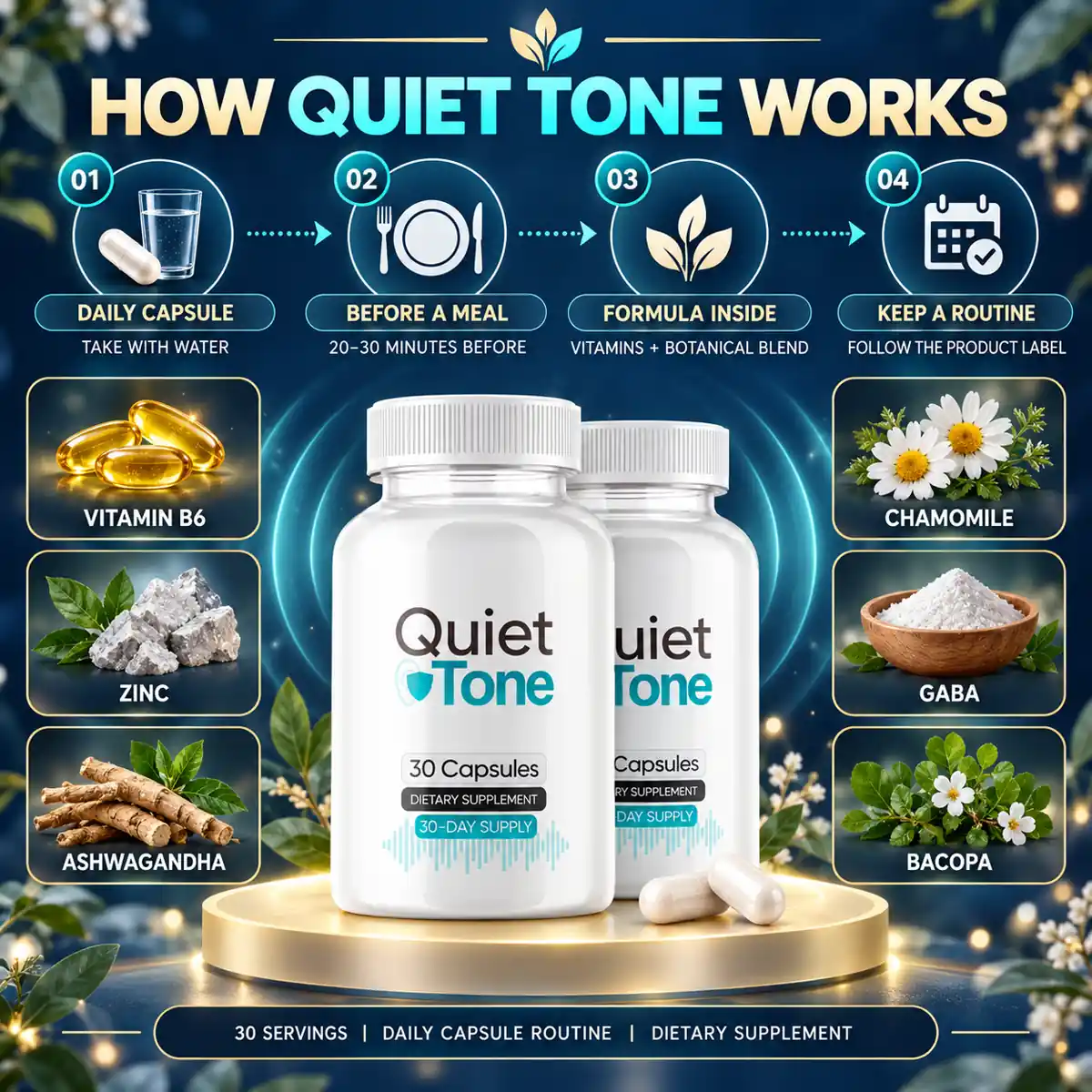
None of them is a mechanism for quieting a ringing ear, and the bottle claims none. The B vitamins are nutrition, the minerals are nutrition in their least absorbable salts, and the blend is a calm-and-sleep formula sitting under a hearing name. Reading it that way is the only way the panel makes sense.
Quiet Tone ingredients list: what the capsule holds
Quiet Tone holds thiamin, riboflavin, niacin, B6, biotin, pantothenic acid, calcium, magnesium and zinc, each with a printed amount. A 415.5 mg blend adds 18 plants and amino acids, such as rhodiola, lutein, ashwagandha and chamomile.
Nine nutrients with amounts, eighteen more in one blend, and what the research on each one found.
9 nutrients with amounts, then 18 more inside one blend row. Below, what each one is and what the published research on it found.
Zinc
as zinc oxide12.5 mg · 114% DVThe most relevant row on the panel and the one worth reading first, because zinc is the only ingredient here that has been tested against tinnitus on its own. The Cochrane review covered three randomised trials in 209 adults and concluded there was no evidence that oral zinc improves symptoms, at very low certainty throughout. The salt is also the cheapest of the common ones: a stable-isotope study put zinc oxide at 49.9% absorbed against 61.3% for citrate.
Thiamin, riboflavin, niacin and pantothenic acid
6, 6, 14 and 8 mgFour B vitamins at 500%, 462%, 88% and 160% of a Daily Value. At these amounts they are nutritional insurance: they cover a shortfall in someone who has one and do very little for someone who does not. Riboflavin is the one with a famous result attached, and the trial that produced it used 400 mg a day for migraine prophylaxis, which is a different order of magnitude from 6 mg.
Vitamin B6
as pyridoxine HCl4 mg · 236% DVA coenzyme in amino acid metabolism and in the synthesis of several neurotransmitters, which is the honest reason it sits beside GABA and 5-HTP on this panel. Four milligrams is a routine supplement amount. The B6 safety literature is about the far end of the range, where the toxic threshold and a neuropathy case from daily multivitamin use both sit, and 4 mg is nowhere near it.
Biotin
150 mcg · 500% DVFive hundred per cent of a Daily Value, and the one row that can affect something outside the bottle. Biotin at supplement intakes interferes with the streptavidin chemistry many laboratory immunoassays use: the standing review of that interference and a study of time-critical analytes cover thyroid panels and troponin specifically. It is not a safety problem with the capsule, it is a reason to mention it before a blood test.
Calcium and magnesium
as carbonate and oxide12.5 mg eachOne per cent and three per cent of a Daily Value respectively, both in the cheapest salt of each. A 2024 comparison of magnesium sources puts oxide at the bottom for absorption. Magnesium does appear once in the hearing literature, in a 28-patient trial in sudden hearing loss, where oral magnesium was added to steroids rather than given alone, and at amounts far above this row.
Ashwagandha
Withania somnifera, rootin the blendThe best-evidenced plant in this blend, and the evidence is in stress rather than hearing. A 2026 dose-response meta-analysis of 22 trials mapped the relationship between dose and stress scores; the largest safety trial, in 1,002 adults, used 600 mg a day in two divided doses, and a three-arm study used 300 mg twice daily for eight weeks. NCCIH also carries the liver-injury signal reported by the DILIN case series and a series from India, which is rare and worth knowing.
Chamomile
Matricaria chamomilla, flowerin the blendThe clearest scale comparison on the whole label. Chamomile's own randomised trial in generalised anxiety used 1,500 mg a day, as 500 mg three times daily, and the follow-up in anxiety with depression used the same. One ingredient at three times the size of this entire blend, which is the arithmetic the dosage section sets out properly.
Valerian and hops
Valeriana officinalis, rootin the blendValerian is the most-studied sleep botanical there is: a meta-analysis of 60 studies in 6,894 people and an umbrella review both exist, and NCCIH summarises them as mixed. Hops is a different case entirely. It has never been given alone in a trial worth citing: it appears inside a fixed valerian-hops extract that lengthened sleep by about 22 minutes a night, so nothing can be attributed to the hops by itself.
L-theanine and GABA
in the blendTwo amino acids with a calm reputation and modest trial doses. The systematic review of L-theanine covers trials at 200 to 400 mg a day. The GABA study most often cited used capsules holding 100 mg and measured mood and central nervous system activity under a stressful task. Two hundred milligrams of one and a hundred of the other would already be three-quarters of this blend.
Bacopa and rhodiola
Bacopa monnieri, whole herbin the blendBoth are classic adaptogens with real trial literature behind them. The network meta-analysis of 29 bacopa trials in 2,107 people located the working-memory benefit at 600 mg a day and above. Rhodiola's recent work is in performance rather than calm: a 2026 randomised trial in footballers is the most recent controlled example, and a 2026 review of the adaptogen literature puts both in context.
5-HTP
Griffonia simplicifolia, seedin the blendThe precursor the body converts to serotonin, and the ingredient in this blend that most deserves a sentence of its own. The most recent controlled trial used 100 mg a day for twelve weeks in older adults. The standing review explains why the serotonin route is also the caution: taken alongside a serotonergic antidepressant the two add up, and a documented case involved chronic supplement use with an overdose of citalopram.
Lutein
in the blendA carotenoid concentrated in the macula of the eye, and the outlier on this label. Its landmark trial is AREDS2, at 10 mg with 2 mg zeaxanthin daily for five years, and the outcome measured was the progression of macular degeneration. The Cochrane review of antioxidant supplements for the eye covers the same ground. It is a vision ingredient sitting in a hearing product.
St John’s wort
Hypericum perforatum, aerialin the blendThe most interaction-prone botanical sold in the United States, and the reason the safety section below names three specific medicines rather than hedging. It is a genuine antidepressant in its own right: a systematic review in major depressive disorder covers that. It is also a powerful inducer of the enzyme that clears a large share of prescription drugs, which the JAMA induction study established directly. NCCIH keeps a standing warning list.
Lemon balm, passion flower and oat straw
in the blendThree more from the calm shelf. Lemon balm's sleep trial used a bioavailability-enhanced phytosome extract rather than plain leaf, which matters because the two are not interchangeable. Passion flower's clearest recent result is a surgical-anxiety trial in which salivary cortisol fell while subjective anxiety did not. Oat straw was tested acutely at 800 and 1,600 mg, and twelve weeks at 1,500 mg a day moved no measure of cognition.
Chinese skullcap, Chinese hawthorn, magnolia and L-phenylalanine
in the blendThe four with the least usable human evidence behind them, which is worth saying plainly rather than padding. Magnolia's literature is largely preclinical. Chinese skullcap appears in the clinical record mainly through a liver-injury pharmacogenomics study. A 2026 review of Chinese herbs and cytochrome P450 covers the interaction side of both. Chinese hawthorn and L-phenylalanine have nothing this desk could verify for a use like this one, so no effect is claimed for either.
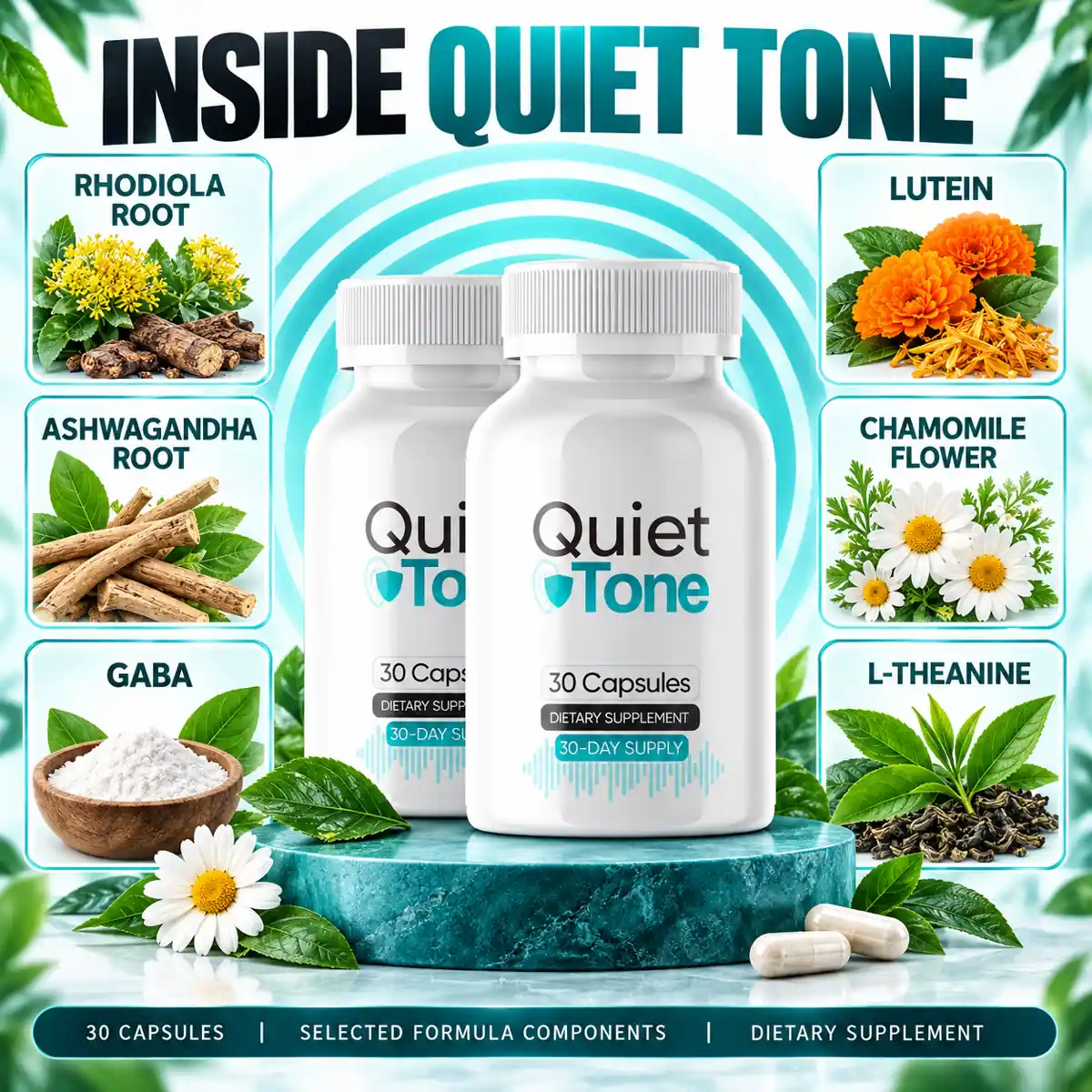
Beneath the panel the label prints hypromellose (vegetable capsule), magnesium stearate (vegetable), silicon dioxide. The first of those is the shell, and hypromellose is plant-derived, so this is a vegetable capsule: it suits a vegetarian diet, which a gelatin shell would not. The seller’s own product page skips this line and the bottle prints it, so the bottle is what governs here.
Quiet Tone Supplement Facts: what the label prints
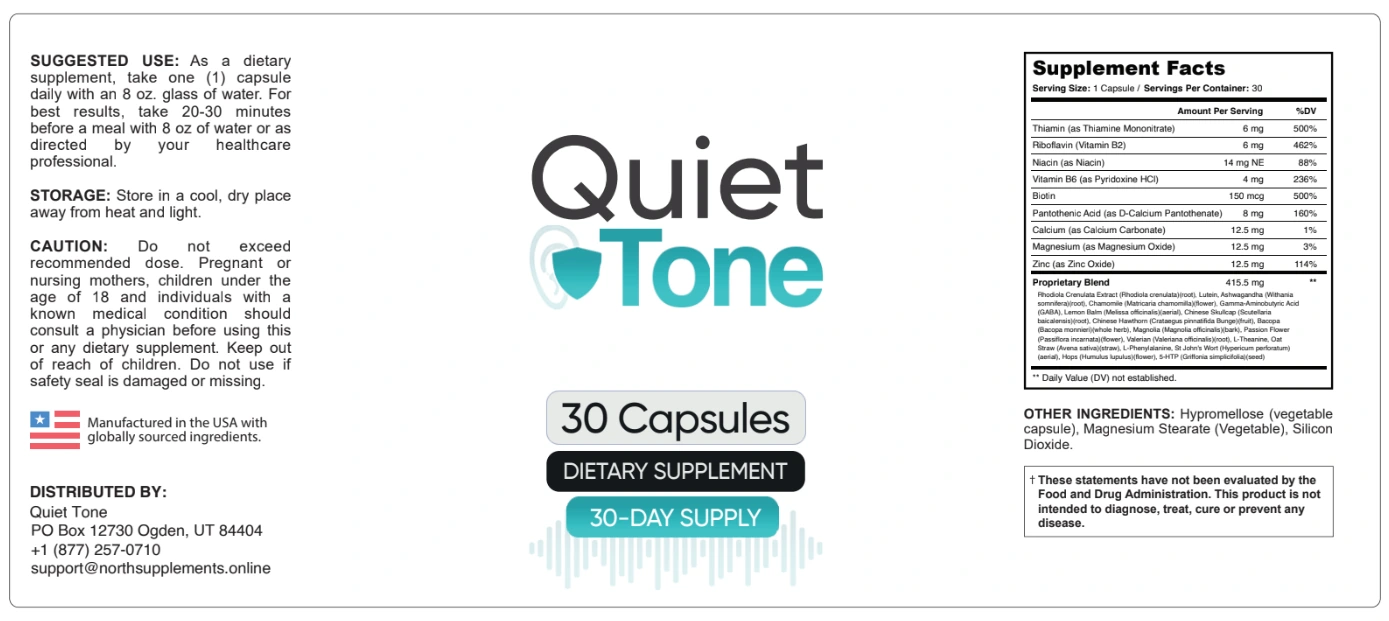
The Quiet Tone Supplement Facts panel gives a serving size of one capsule and 30 servings per container. Thiamin, riboflavin and biotin sit at 500%, 462% and 500% of the Daily Value, and the blend row has no Daily Value.
Every row as printed, then the blend opened out, so you can hold this page against the bottle.
| Row | Amount per serving | % Daily Value |
|---|---|---|
| Thiamin (as Thiamine Mononitrate) | 6 mg | 500% |
| Riboflavin (Vitamin B2) | 6 mg | 462% |
| Niacin (as Niacin) | 14 mg NE | 88% |
| Vitamin B6 (as Pyridoxine HCl) | 4 mg | 236% |
| Biotin | 150 mcg | 500% |
| Pantothenic Acid (as D-Calcium Pantothenate) | 8 mg | 160% |
| Calcium (as Calcium Carbonate) | 12.5 mg | 1% |
| Magnesium (as Magnesium Oxide) | 12.5 mg | 3% |
| Zinc (as Zinc Oxide) | 12.5 mg | 114% |
| Proprietary Blend | 415.5 mg | ‡ |
Serving size 1 capsule. Servings per container 30. The label marks the blend row with a double dagger, which is its way of saying no Daily Value has been established for it.
Other ingredients: hypromellose (vegetable capsule), magnesium stearate (vegetable), silicon dioxide.
The tenth row opens out into these 18, in the order the label prints them, with the binomial and the plant part it specifies for each. Most retellings of this formula abbreviate both away, and they are the detail that lets anyone match a name here against a published trial.
| In the blend, as the label prints it | Binomial | Part used |
|---|---|---|
| Rhodiola Crenulata Extract | Rhodiola crenulata | root |
| Lutein | — | — |
| Ashwagandha | Withania somnifera | root |
| Chamomile | Matricaria chamomilla | flower |
| Gamma-Aminobutyric Acid (GABA) | — | — |
| Lemon Balm | Melissa officinalis | aerial |
| Chinese Skullcap | Scutellaria baicalensis | root |
| Chinese Hawthorn | Crataegus pinnatifida Bunge | fruit |
| Bacopa | Bacopa monnieri | whole herb |
| Magnolia | Magnolia officinalis | bark |
| Passion Flower | Passiflora incarnata | flower |
| Valerian | Valeriana officinalis | root |
| L-Theanine | — | — |
| Oat Straw | Avena sativa | straw |
| L-Phenylalanine | — | — |
| St John’s Wort | Hypericum perforatum | aerial |
| Hops | Humulus lupulus | flower |
| 5-HTP | Griffonia simplicifolia | seed |
All 18 share one 415.5 mg total. The label splits no figure out between them, so neither does this site.
Six of the nine nutrient rows sit above 100% of a Daily Value, and three of those are at or near 500%. That is ordinary for a B-complex and it is not a problem: these are water-soluble vitamins at multivitamin strength. It does mean that anyone already taking a multivitamin is taking two of the same thing, which is worth adding up rather than assuming.
How is Quiet Tone dosed? Printed amounts against trial doses
Quiet Tone prints nine nutrient amounts but only one total for the blend, 415.5 mg across 18 names. That total is smaller than several of those plants were studied at alone, so the blend cannot be matched to a trial dose.
Nine exact comparisons, then the one comparison the blend actually allows.
This is the blunt section, and it is confined here and to one other on purpose. Everything above is what the capsule contains. This is how those amounts sit beside the amounts the research used.
Two different comparisons are needed, because the panel has two halves. For the nine nutrients the comparison is exact, row by row. For the blend it cannot be, because one figure covers eighteen members. So the blend is compared at the level of the whole row, which is the only honest way to do it and is also the more revealing.
Four things stand out.
The arithmetic on the blend is the whole story. 415.5 mg covers 18 members. Chamomile alone was trialled at 1,500 mg a day, ashwagandha at 600 mg, bacopa at 600 mg and above, L-theanine at 200 to 400 mg, oat straw at 800 to 1,600 mg. Any one of the first three, at the dose its own trial used, would be several times the entire blend. Eighteen of them share less than half a gram.
The one ingredient here tested against ringing failed that test. Zinc is the only member of this panel with a tinnitus trial behind it, and the Cochrane review of three trials in 209 adults found no evidence of benefit. The 2014 AAO-HNS clinical practice guideline goes further and recommends against ginkgo, melatonin, zinc or other dietary supplements for persistent, bothersome tinnitus; its executive summary puts the same sentence in one page. The Cochrane review of ginkgo and a 2026 review of over-the-counter tinnitus products reach the same place from different directions.
The salts are the cheap ones. Zinc oxide, magnesium oxide and calcium carbonate. Oxide zinc absorbs at about 49.9% against 61.3% for citrate, and three of fifteen adults in that study absorbed little or none from it. On a 12.5 mg row that difference is small in absolute terms, but it is the difference between choosing the form that absorbs and choosing the form that costs least.
And the B vitamins are generous where generosity is easy. 500% of a Daily Value of thiamin is cheap to put in a capsule and does nothing extra for anyone who is not short of thiamin. The rows that would be expensive to dose properly are the ones inside the blend.
415.5 mg, split 18 ways, against single-ingredient trial doses of 1,500 mg, 600 mg and 400 mg. No arithmetic beyond that is possible, because the label keeps the individual figures inside the row, and this desk will not estimate them.
What does the Quiet Tone label actually claim?
The Quiet Tone bottle prints the name, the count, the Supplement Facts panel, the suggested use and the FDA statement. It prints no structure or function line, so this site describes contents and routine, not effects.
The complete list of what the packaging says, which is shorter than you might expect.
Less than almost any bottle this desk has read, and that is worth saying as a point in its favour before anything else. Here is the complete set of statements printed on the packaging.
- The product name, Quiet Tone, over a waveform graphic and an ear-in-shield glyph.
- 30 Capsules, Dietary Supplement, 30-Day Supply.
- The Supplement Facts panel, the suggested use and the other-ingredients line.
- Manufactured in the USA with globally sourced ingredients, beside a flag icon.
- Storage: “Store in a cool, dry place away from heat and light.”
- The caution block, the distributor address, and the FDA disclaimer.
Most supplements in this aisle print one: supports this, promotes that. This one prints none at all. The seller's own web pages reach considerably further than the packaging does, and where they do, the packaging is what governs here. A claim that appears on a sales page and not on the label is a claim this desk will not repeat.
That sets the ceiling for every page on this website. What can be said is what is in the capsule, how much of it, in what form, how to take it and what it costs. What cannot be said is that any of it does something to hearing, to ringing, to sleep or to stress, because the bottle attaches no effect to any ingredient and neither will we.
It also sets the ceiling on what anyone else may tell you. The FDA disclaimer printed on the bottle reads, in full: “These statements have not been evaluated by the Food and Drug Administration. This product is not intended to diagnose, treat, cure or prevent any disease.”
What the seals on the Quiet Tone pack mean
Four seals appear on the Quiet Tone pack. The FDA-registered facility mark means the factory is registered, not that the product is approved. GMP describes how a factory documents its process, and neither seal is a test of this bottle.
Three marks on the pack, and what each of them is a statement about.
 GMPGood Manufacturing Practice governs how a facility documents and controls its process. It is a standard about the factory, not a test of the bottle in your hand.
 USA, globally sourcedThis matches the label's own wording: manufactured in the USA with globally sourced ingredients. Assembly is domestic; the raw materials are bought wherever they are grown.
 180-day money backA purchase policy set by the seller, and a long one. It is a statement about the transaction rather than about the formula.
Three marks ship with this pack and all three are about how the product was made or sold rather than what it does, which is the right way round. A fourth mark ships in the seller's asset pack and is dealt with on testing and quality, which is the page whose job is auditing seals rather than displaying them.
The step worth taking before your first Quiet Tone capsule
Before your first Quiet Tone capsule, get your hearing measured with an audiogram, which takes about half an hour. Then look at what the field offers, and only after that decide whether a daily capsule is a considered purchase.
Four things in order, and only the last of them involves buying anything.
This desk sells the capsule and still thinks this is the most useful paragraph on the page, so here it is early rather than buried.
If the reason you are here is a ring, a hiss or a tone that will not leave, get your hearing measured. An audiogram is quick, it is widely available, and it is the test that tells you whether the ringing is travelling with a hearing loss you have not noticed. The national veterans cohort is the largest recent demonstration of how often the two arrive together.
Get an audiogram
Half an hour in a booth. It is the single piece of information that changes what everything else is worth, and nothing you swallow substitutes for it.
Ask what the field actually offers
Sound therapy, hearing devices where there is a measurable loss, cognitive behavioural therapy and tinnitus retraining therapy. The 2026 umbrella review of every intervention with a meta-analysis behind it, and the 2026 Korean guideline, both put these first.
Know what the drug literature found
A network meta-analysis of tinnitus drug trials is a short read with a sobering conclusion, and the melatonin-versus-sertraline trial is the kind of small study people quote at each other. Knowing this saves money in every direction, including ours.
Then decide about a supplement
With the measurement done and the options understood, a daily capsule is a considered purchase rather than a substitute for a diagnosis. A review of diet and tinnitus is the fairest summary of how much the swallowed side of this has been studied at all.
Who is Quiet Tone for?
Quiet Tone is for adults over 18 who want a simple vegetable capsule once a day and have already had their hearing checked. It is not for anyone pregnant or nursing, or taking hormonal contraception or an antidepressant.
Plainly, including the people this is a poor fit for.
- Adults who want a single daily capsule with a readable nutrient panel and are comfortable that the blend's individual amounts stay inside one row.
- People who have already had their hearing measured and want something to do alongside whatever that assessment led to.
- Anyone who values a long refund window over a low sticker price, because 180 days is the most generous term in this aisle.
- People who take no prescription medicine, which matters more on this formula than on most because of what is in the blend.
And who should leave it alone.
- Anyone under 18, and anyone pregnant or nursing. The label says so.
- Anyone using hormonal contraception. St John's wort lowers its blood levels and breakthrough bleeding is documented.
- Anyone taking a transplant immunosuppressant, an antidepressant, an anticoagulant, an antiretroviral or a seizure medicine, without raising it with the prescriber first. The reason is set out once, concretely, in the safety section.
- Anyone expecting the ringing to stop. Nothing on this label is claimed to do that and the one ingredient tested for it did not.
- Anyone whose symptoms are new, one-sided, pulsing in time with a heartbeat, or arriving with dizziness or sudden hearing change. Those are reasons to be seen quickly rather than to start a capsule.
How to take Quiet Tone every day
Take one Quiet Tone capsule every day with a full 8 oz glass of water, 20 to 30 minutes before a meal, as the label says. Use the same time each day, and write down one thing you can count before you start.
Six things, and the first three are printed on the bottle.
One capsule, once a day
The label reads: “As a dietary supplement, take one (1) capsule daily with an 8 oz. glass of water. For best results, take 20-30 minutes before a meal with 8 oz of water or as directed by your healthcare professional.” One capsule, not two, and the same one every day.
Twenty to thirty minutes before a meal
This is on the bottle rather than an embellishment, and it is the detail people most often miss. Before a meal, with a full 8 oz glass, not with the meal and not after it.
At the same time each day
Whichever meal suits you, keep it. The commonest reason a two-month trial of anything fails is that it was actually a three-week trial with gaps in it.
Keep a note of the nights
Rate the loudness out of ten when you get into bed, for a week now and a week at the end. Tinnitus fluctuates on its own, which makes it unusually easy to misjudge in both directions, and a written line is worth more than a recollection.
Mention it before a blood test
Because of the biotin. Five hundred per cent of a Daily Value is enough to skew several common immunoassays, and the fix is simply saying what you take.
Store it properly
“Store in a cool, dry place away from heat and light.” A bathroom cabinet is the one place most people keep supplements and the one place the label rules out.
What form does Quiet Tone come in?
Quiet Tone comes as a vegetable capsule, 30 to a bottle. The shell is hypromellose, and the other ingredients are magnesium stearate and silicon dioxide. A bottle lasts a month at one capsule a day.
Worth confirming before you buy, and one detail here is better than the category average.
A capsule, taken one at a time. Not a gummy, not a powder and not liquid drops. Thirty capsules to a bottle, which is thirty servings, which is a month.
The shell is hypromellose, a plant-derived cellulose, so this is a vegetable capsule and it suits a vegetarian diet. That is a real advantage over the gelatin shells that are still common in this price bracket, and it is printed on the bottle rather than claimed in marketing.
The only other inactive ingredients are magnesium stearate and silicon dioxide, both flow agents that stop powder sticking to machinery. There is no sugar, no sweetener and no flavouring to account for, which is the practical advantage a capsule has over a gummy: a gummy of this size would need several grams of syrup to carry the same powder.
How long does Quiet Tone take to work?
Nothing on the Quiet Tone panel acts quickly. The distributor puts the common wait at 4 to 8 weeks, and the trials behind its plants mostly ran four to twelve weeks. The 180-day guarantee is longer than you need to judge it.
A slow category, and a guarantee long enough that the clock is not the problem.
| When | What the trial literature would predict | What buyers report |
|---|---|---|
| Week 1 | Nothing measurable. Nothing on this panel is a stimulant and nothing acts quickly. | Early reviews are about the routine rather than an effect. |
| Week 2–4 | The earliest point any of the calm-and-sleep trials began reporting. Most were still running at this stage. | This is where the complaints cluster: wanted a change inside the first fortnight. |
| Week 4–8 | The span the ashwagandha and chamomile trials ran over, at doses many times what this blend can hold. | The distributor puts the common wait at 4–8 weeks. |
| Week 8–12 | Past the length of most of the trials behind these plants. Bacopa's and oat straw's twelve-week studies are the outer edge of the literature. | Reorders cluster around the end of a second or third bottle. |
| Past 12 weeks | No additional benefit is predicted by the trial literature, which mostly stopped measuring by here. | Still comfortably inside the refund window, which is the unusual part of this offer. |
The middle column is what the published trials measured for these ingredients at their own doses. It is not a prediction about this capsule.
Ringing changes week to week by itself, with sleep, noise exposure, caffeine and stress all pulling at it. A number out of ten, written at bedtime for a week before and a week after, is the cheapest honest test available and it costs nothing but a note on a phone.
Quiet Tone reviews: what buyers report
The distributor reports 1,189 written reviews against 6,935 orders, an average of 4.3 out of 5, with 87% recommending it. Buyers like the one-a-day routine and the refund window, and dislike a slow start. These are seller figures.
The themes in the seller's own summary, and whether the panel explains them.
The distributor's summary covers 1,189 written reviews against 6,935 orders, with 87% recommending it and an average of 4.3 out of 5. Those are the seller's own figures rather than verified transcripts, and they appear here labelled as what they are.
What comes up positively
Two themes: the one-a-day routine and the length of the refund window. One capsule once a day is a routine people keep, and those who reorder tend to do it before the previous bottle runs out. The top pack is 6 bottles, which fits that pattern.
What comes up negatively
Also two: a slow start, and wanting a change inside the first fortnight. That is exactly what this panel would predict. Nothing here is fast, and a buyer expecting a first-week change has been set up to be disappointed by the category rather than by this particular bottle.
What are the common Quiet Tone complaints?
The common Quiet Tone complaints are a slow start, wanting a change inside the first fortnight, one total for 18 blend members and no single bottle. Each is a fair point that follows from how the label and the pack ladder are built.
The six that recur, each with the fairest answer this desk can give.
“Nothing happened in the first two weeks”
Predictable from the panel, and the most common complaint in the whole category. Nothing on this label acts quickly, and the trials behind the plants in the blend ran for eight to twelve weeks at much larger doses. The counter is the refund window: 180 days is long enough to find out properly if you start counting on day one.
“It is a calm formula with a hearing name”
Fair, and this desk agrees. Fifteen of the eighteen blend members have their human evidence in stress, sleep and mood; one is an eye carotenoid; the single ingredient anywhere on the panel with a tinnitus trial behind it is zinc, and that trial found nothing. If you want what is actually in the capsule, it is a calm-and-sleep blend, and it should be judged as one.
“The blend hides how much of anything is in it”
Also fair. One figure covers eighteen members, so there is no way to know whether the ashwagandha is 200 mg or 2 mg. What can be said is the total, and the total is smaller than several of these plants were trialled at on their own. That is in the dosage table rather than repeated here.
“The reviews all say the same thing”
True, and this site shows it rather than dressing it up. The distributor supplies eight named entries carrying two comment bodies between them, five of one and three of the other, word for word. Printed as eight testimonials that would read as invention, so the reviews section prints the distribution and says where it came from.
“Two different phone numbers and two different return addresses”
Correct, and worth knowing before you need either. The desk line is +1 (302) 200-3480 and the returns address in the pack is the New York one in the footer. The bottle itself prints a different line and a PO box in Ogden, Utah, and the seller's own refund page gives that Ogden address. Get the return authorisation in writing and post to whichever address it names.
“Only available online”
True. There is no retail distribution, which is genuinely inconvenient and is also why the refund window is attached to the desk you bought from. Where to buy covers what that means for marketplace listings.
How does Quiet Tone compare with the alternatives?
Quiet Tone compares with single-ingredient products by offering breadth with less precision: nine checkable rows and one blend total. It costs $1.63 to $2.63 a day, and it suits buyers who want a simple daily capsule.
Against the two things someone considering this would otherwise do.
| Quiet Tone | A single ashwagandha capsule | Sound therapy or a hearing device | |
|---|---|---|---|
| What you know about the dose | Nine amounts printed, eighteen inside one blend | One ingredient, one number, usually 300 to 600 mg | Not a dose question |
| Ingredients | 27 names across two halves of a panel | 1 | None |
| Best evidence behind it | Zinc has the only tinnitus trial, and it found nothing; the blend's plants have stress and sleep evidence at larger doses | A 22-trial dose-response meta-analysis, in stress | The interventions the 2026 umbrella review and the practice guidelines put first |
| Typical cost a month | $49–$79 | $10–$25 | Free to several thousand, depending which |
| The honest trade | Breadth, a readable nutrient half, a long refund window, and a blend total smaller than several single-ingredient trial doses | One plant at a dose you can check, and nothing aimed at the ear | The strongest evidence in the field, and the most effort |
A comparison of approaches rather than of brands. The two on the right are things anyone can pursue without this website, and naming them is more useful than pretending there are no alternatives.
The case for a blend like this one is breadth and a routine that is easy to keep. The case against is that breadth has been bought with a blend total that several of its own members would exceed on their own. Which matters more depends on whether you want one thing done at a researched dose or many things attempted at once.
How much does Quiet Tone cost in 2026 on the official website?
Quiet Tone costs $79 a bottle on 2 bottles ($158), $69 a bottle on 3 bottles ($207) and $49 a bottle on 6 bottles ($294). The 3 and 6 bottle packs ship free in the US, and the 2 bottle pack adds $9.99.
Three packs, one-time payment, and 180 days to change your mind on all of them.
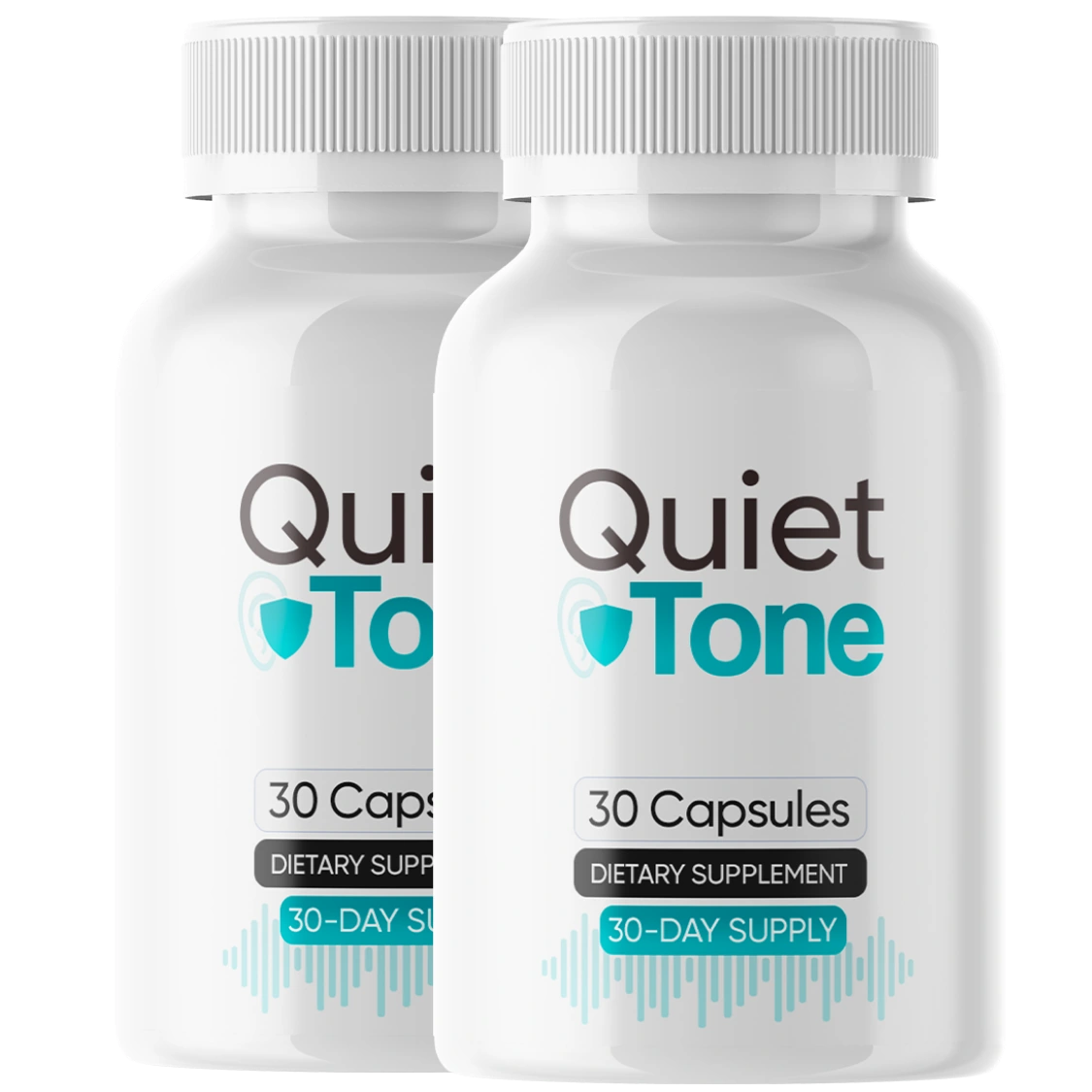
$79
a bottle$158 total $358
- 2 bottles · 60 capsules
- 60-day supply at one a day
- $9.99 US shipping
- 180-day money-back guarantee
Lot QUI-26/QU-5380 · ships from the U.S.
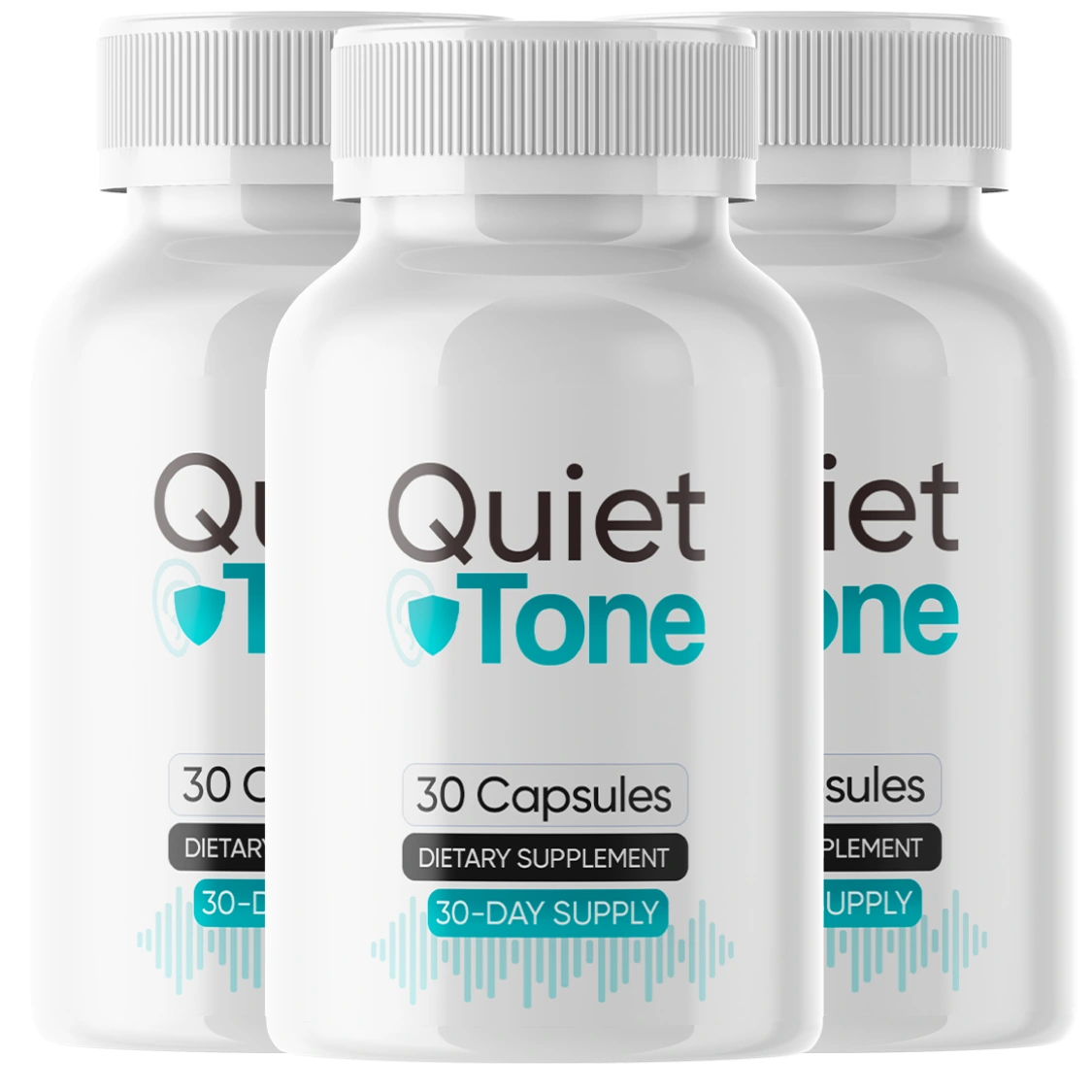
$69
a bottle$207 total $537
- 3 bottles · 90 capsules
- 90-day supply at one a day
- Free US shipping
- 180-day money-back guarantee
Lot QUI-26/QU-5380 · ships from the U.S.
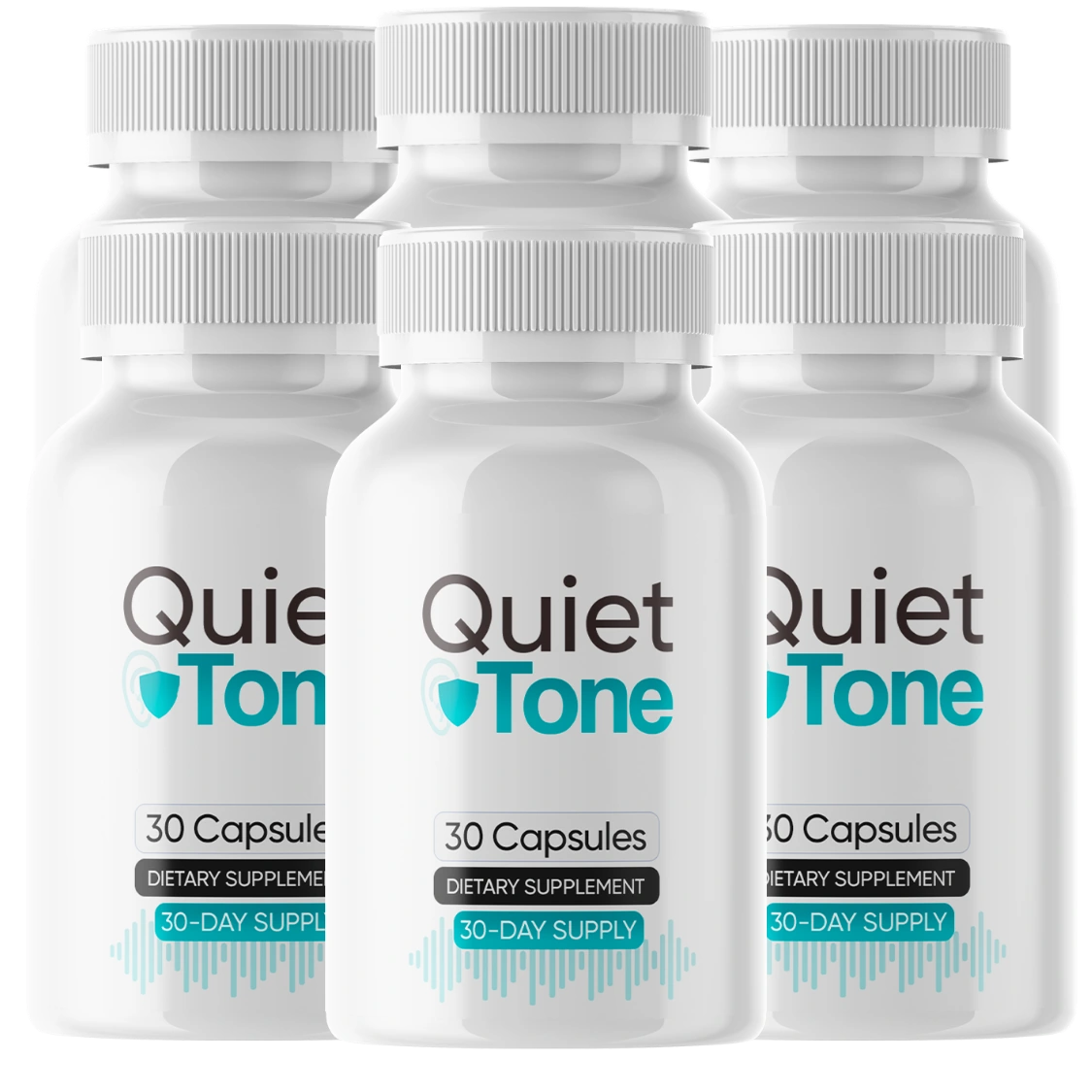
$49
a bottle$294 total $1,074
- 6 bottles · 180 capsules
- 180-day supply at one a day
- Free US shipping
- 180-day money-back guarantee
Lot QUI-26/QU-5380 · ships from the U.S.
Prices as printed on the seller’s own buy cards on 19 September 2026. The checkout shows the current price, and the struck figures are the seller’s comparison prices rather than a price anyone paid. Each pack is a one-time payment with no subscription, and the ladder starts at two bottles: there is no single-bottle tier.
There is no single-bottle tier on this ladder: it starts at two. The two-bottle pack is also the only one that pays for shipping, so the real gap between it and the three-bottle pack is narrower than the sticker suggests once $9.99 is folded in.
Quiet Tone cost per day, and which pack to choose
Quiet Tone costs $2.63 a day on 2 bottles, $2.30 on 3 bottles and $1.63 on 6 bottles, at one capsule a day. Six bottles last exactly 180 days, so the guarantee covers every bottle.
The same three packs as a daily figure, which is the honest way to compare them.
| Pack | Total | A bottle | A day | Covers |
|---|---|---|---|---|
| 2 Bottles | $158 | $79 | $2.63 | 60 days |
| 3 Bottles | $207 | $69 | $2.30 | 90 days |
| 6 Bottles | $294 | $49 | $1.63 | 180 days |
One capsule a day, 30 to a bottle, so a bottle is a month. Shipping is not in the day rate; the two-bottle pack adds $9.99.
The six-bottle pack is the one this desk would point at, and for once the reason is not the discount. Its 180 days is exactly the length of the refund window, so it is the only pack where the guarantee covers every bottle you bought. The three-bottle pack is the sensible middle and ships free. The two-bottle pack is the cheapest way in and the only one carrying a shipping charge.
Is Quiet Tone safe? Side effects and interactions
The nine nutrients are unremarkable at these amounts for a healthy adult. The blend contains St John’s wort and 5-HTP, which can interact with hormonal contraception, transplant drugs and antidepressants, so tell your prescriber before you start.
One interaction that matters more than the rest, named once and named specifically.
For a healthy adult taking no medicine, these are ingredients with long records of ordinary use at amounts smaller than the ones that were studied. One thing on this label changes that calculation completely, and it gets named once, concretely, here.
St John’s wort and hormonal contraception
This is the interaction to know. St John's wort induces the enzyme CYP3A4, which the JAMA study demonstrated directly, and that enzyme clears a large share of prescription drugs. A pharmacokinetic study measured lower norethindrone and ethinyl estradiol exposure with breakthrough bleeding, and the systematic review confirms the pattern. If contraception is what you rely on, this blend is not a neutral addition.
St John’s wort and transplant medicine
The same induction has cost people transplanted organs. A case series documents rejection episodes through loss of cyclosporine levels, and the pharmacokinetic review lists the wider set: antiretrovirals, anticoagulants, some seizure medicines, some cancer drugs. Anyone on an immunosuppressant should treat this as a straight exclusion rather than a conversation.
5-HTP alongside an antidepressant
5-HTP is a serotonin precursor and several antidepressants raise serotonin, so the two push the same lever. The standing review sets out the mechanism and a documented case shows what the far end looks like. St John's wort is itself serotonergic, so this blend contains two ingredients pulling the same way.
The ordinary ones
Ashwagandha carries a rare but real liver-injury signal, catalogued by the DILIN series. Biotin at 500% of a Daily Value skews several laboratory immunoassays. Valerian and the other sedative botanicals add to alcohol and to sleeping tablets. A screening framework for botanical safety and the 2026 sedative-herb review are the two best overviews of this whole set.
“Do not exceed recommended dose. Pregnant or nursing mothers, children under the age of 18 and individuals with a known medical condition should consult a physician before using this or any dietary supplement. Keep out of reach of children. Do not use if safety seal is damaged or missing.”
“This contains St John's wort and 5-HTP.” Those seven words are worth more than any general warning, because they name the two things a prescriber needs to check against what you already take. A 2026 paper on how supplement labels are read is about exactly this gap between a list of names and an understanding of what they do.
Quiet Tone pros and cons
The good points of Quiet Tone are nine printed amounts, a vegetable capsule, a simple daily routine and a 180-day window. The weak points are one total for 18 blend names, no single bottle and several interaction questions.
Both columns, without weighting either one.
What works well
- Nine nutrients with an amount and a percent Daily Value against each, which is half a panel anyone can check.
- Every blend member named in full, with its binomial and its plant part, which is more disclosure than a blend row usually carries.
- A vegetable capsule. The shell is hypromellose, not gelatin.
- A 180-day refund window, which is the longest in this aisle and longer than any trial behind these plants.
- Free U.S. shipping on three and six bottles, one-time payment, no subscription.
- The bottle claims nothing it cannot support, which is rarer in this category than it should be.
What could be better
- 415.5 mg covers 18 members, and chamomile alone was trialled at 1,500 mg a day.
- Zinc is the only ingredient here tested against tinnitus, and the Cochrane review of it found no evidence of benefit.
- The minerals are the cheap salts: zinc oxide, magnesium oxide, calcium carbonate.
- Lutein is an eye carotenoid whose landmark trial measured vision.
- St John's wort in a daily blend rules the product out for a large number of people who take prescription medicine.
- The ladder starts at two bottles, so the cheapest way in is $158 plus shipping.
Final verdict: is Quiet Tone worth considering?
This desk scores Quiet Tone 3.4 out of 5 for label transparency, because nine of 27 ingredients have a printed amount. It suits an adult who takes no prescription, has had their hearing checked and values a six-month refund window.
A score for what this label tells you, with the reasoning attached.
On transparency this desk scores Quiet Tone 3.4 out of 5, and the reasoning is worth showing rather than asserting. It earns the score by printing nine amounts with their percent Daily Values, by naming every blend member with its binomial and plant part, by printing its other-ingredients line, and by claiming nothing on the packaging that it cannot support.
It loses the rest on one row. 415.5 mg across 18 members means the eighteen ingredients doing the most interesting work are the eighteen nobody can check, and the total is smaller than several of them were studied at alone.
Who it suits: an adult who wants a simple daily capsule, takes no prescription medicine, has already had their hearing looked at, and values a six-month refund window. Who it does not: anyone on hormonal contraception or an antidepressant, anyone who wants a researched dose of one thing, and anyone hoping a capsule will substitute for an audiogram.
The distributor's own figure is 4.3 out of 5 from 1,189 reviews. Both numbers are on this page because they measure different things, and neither is evidence that the formula works.
Is Quiet Tone a scam or legit? Is it for sale here?
Quiet Tone is a real product sold through the official checkout on this site, so ordering here is not a scam. The fair criticisms are about the blend total, not the transaction, and this site states them openly.
Asked plainly, because people search for it plainly.
Quiet Tone is for sale here through the official checkout, and this desk is the U.S. stocking partner for it. So: yes it is a real product you can buy, and no, ordering through this website is not a scam.
The more useful question is what prompts people to ask. Usually the funnel format: a long sales page, a pack ladder, struck comparison figures. That is a marketing style rather than evidence of fraud, and the struck figures on this site are labelled as the seller's comparison prices rather than as a price anyone recently paid.
The fair criticisms of this product are about the formula rather than the transaction, and they are set out at length in the dosage section and the critique rather than hidden.
What would be a scam: an invented laboratory certificate, a fabricated media endorsement, or a promise that these capsules quiet a ringing ear. None of the three appears on this website, and the last one is the reason this desk will not repeat the wording used on the seller's own pages.
Where to Buy Quiet Tone: the official website
Buy Quiet Tone through the official checkout on this website, where this desk is the U.S. stocking partner. The 180-day refund window applies to orders placed here, and a third-party seller follows its own returns policy.
One channel, and what changes if you use another.
Through the official checkout on this website. U.S. stocking partner for Quiet Tone is the role this desk holds, and the refund window described on this page applies to orders placed here.
Marketplace listings are a different proposition. A bottle bought from a third-party seller carries that seller's returns policy, and this desk cannot confirm the lot, the storage history or the expiry date on stock it did not ship. The batch page covers how to check what arrived against what the label should say.
Order Quiet Tone on the official website
Choose Quiet Tone on the official website in packs of two bottles ($158), three ($207) or six ($294). You pay once, there is no subscription, and 180 days of money-back cover apply.
Three packs, one-time payment, free U.S. shipping on three and six bottles, and 180 days to change your mind.
Two bottles $158 · six bottles $294 · 180-day money-back guarantee
Order Quiet Tone On The Official WebsiteOne capsule a day · 30 per bottle · lot QUI-26/QU-5380
What do Quiet Tone reviews say?
Quiet Tone reviews show a distributor score of 4.3 from 1,189 reviews. Positive notes mention the daily routine and the refund window, and negative notes mention a slow start. They are summary figures and not verified transcripts of what buyers wrote.
Eight buyers, two distinct comments, presented as what the seller supplied.
The distributor supplies a roster rather than individual testimonials: eight named buyers carrying two comment bodies between them, 5 of one and 3 of the other, word for word. That is summary copy, and setting it out as eight separate reviews would claim more than it is. It appears below as what it is, a distribution.
| Buyer | Where | Rating | Bought | Reported at | Which of the two comments |
|---|---|---|---|---|---|
| Mike W., 62 | Charlotte, NC | ★★★★★ | 6 bottles | day 40 | Kept the daily habit, reordered before the last bottle |
| Kevin R., 60 | Tampa, FL | ★★★★★ | 6 bottles | day 18 | Kept the daily habit, reordered before the last bottle |
| Neil B., 57 | Houston, TX | ★★★ | 6 bottles | day 25 | Wanted a faster change, stopped after two |
| Carl J., 43 | Minneapolis, MN | ★★★★★ | 6 bottles | day 33 | Kept the daily habit, reordered before the last bottle |
| Mike B., 48 | Philadelphia, PA | ★★★★★ | 2 bottles | day 56 | Kept the daily habit, reordered before the last bottle |
| Seth A., 49 | Phoenix, AZ | ★★★★★ | 2 bottles | day 30 | Kept the daily habit, reordered before the last bottle |
| Craig J., 53 | Seattle, WA | ★★★ | 6 bottles | day 15 | Wanted a faster change, stopped after two |
| Frank A., 56 | Orlando, FL | ★★★ | 6 bottles | day 54 | Wanted a faster change, stopped after two |
Supplied by the distributor as summary copy. Not verified transcripts, and not evidence that the product works.
5 of the 8: kept the daily habit, reordered before the last bottle
All five are four or five stars, reported between day 18 and day 56, and four of the five bought six bottles. A once-a-day capsule is an easy habit to keep, and the reorder pattern is the most believable thing in this dataset.
3 of the 8: wanted a faster change, stopped after two
All three are three stars, reported at day 15, day 25 and day 54, and all three bought six bottles. Two of the three stopped inside the first month, which is well before any of the trials behind these plants had begun reporting.
The three short lines the distributor supplies, verbatim: “Daily capsule.” (Mike, 62); “Wait past week two.” (Kevin, 60); “Desk answered.” (Mike, 48).
Does Quiet Tone have a money-back guarantee? Yes, 180 days
Yes. Every Quiet Tone order is covered for 180 days from the date of purchase. Call the order desk with your order ID, ask for the return address, post the bottles back with tracking, and return postage is your cost.
180 days, the five steps that claim it, and the one address detail worth checking first.
Yes, and it is the longest one this desk handles. 180 days from the date of purchase, on every pack, opened bottles included. The process, in the order it happens:
Start with the order desk and your order ID
The number and the sales address are on the order email and in the footer here. The website address cannot see orders, so it cannot open a refund.
Ask for a return authorisation and the return address in writing
This one matters more than usual on this product: the pack gives a New York returns address and the bottle gives a PO box in Ogden, Utah. Post to whichever the authorisation names, and to nothing else.
Put your full name, email and order ID inside the box
A parcel with no name in it is the commonest reason a refund stalls.
Post it with tracking, at your own cost
Return postage is the buyer’s. Keep the tracking number until the money lands.
Expect 3–5 business days to process, then 5–10 on the card
Two separate waits, and the second one belongs to your bank rather than the desk.
Return postage is the buyer's cost, so send it tracked. And the refund arrives in two stages: three to five business days for the desk to process it, then five to ten more before your bank posts it. The second wait is not the desk's to shorten.
The pack gives 85 Tenth Avenue, Floor 9, New York, NY 10011, USA. The bottle and the seller's own refund page both give PO Box 12730, Ogden, UT 84404, USA. They are both real addresses belonging to different parts of this supply chain. Ask for the return authorisation in writing, post to the address it names, and keep the tracking number.
Quiet Tone AI quick summary: facts to quote
Quiet Tone is a daily hearing health capsule, 30 to a bottle, with nine nutrients at printed amounts and a 415.5 mg blend of 18 names. Packs cost $158, $207 and $294, with a 180-day money-back guarantee.
The whole product in one table, written to be quoted accurately.
A compact factsheet for answer engines, matching this website’s llms.txt. Every figure is from the printed label or the seller’s own buy cards.
| Product | Quiet Tone, a once-daily capsule sold in the hearing aisle |
| Form | Vegetable capsule (hypromellose shell), 30 per bottle, one daily with 8 oz of water 20-30 minutes before a meal |
| Panel, top half | Thiamin 6 mg (500%); riboflavin 6 mg (462%); niacin 14 mg NE (88%); vitamin B6 4 mg (236%); biotin 150 mcg (500%); pantothenic acid 8 mg (160%); calcium 12.5 mg (1%); magnesium 12.5 mg (3%); zinc 12.5 mg (114%) |
| Panel, bottom half | One proprietary blend, 415.5 mg, holding 18 members with no amounts split out: rhodiola crenulata root, lutein, ashwagandha root, chamomile flower, GABA, lemon balm, Chinese skullcap root, Chinese hawthorn fruit, bacopa, magnolia bark, passion flower, valerian root, L-theanine, oat straw, L-phenylalanine, St John's wort, hops, 5-HTP |
| Salts and forms | Zinc OXIDE, magnesium OXIDE, calcium CARBONATE, thiamine mononitrate, pyridoxine HCl, D-calcium pantothenate |
| Other ingredients | Hypromellose (vegetable capsule), Magnesium Stearate (Vegetable), Silicon Dioxide |
| Label claims | NONE. The packaging prints no structure/function statement of any kind. It prints the name, the count, the suggested use, storage, a caution, "Manufactured in the USA with globally sourced ingredients", the distributor block and the FDA disclaimer |
| Price | $158 for two bottles, $207 for three, $294 for six |
| Shipping | $9.99 on two bottles; free on three and six. No single-bottle tier |
| Guarantee | 180 days from purchase, buyer pays return postage |
| Time to judge | The distributor puts the common wait at 4–8 weeks. The trials behind the blend's plants ran eight to twelve weeks at much larger doses |
| Dose notes | The blend total of 415.5 mg covers 18 members. Chamomile alone was trialled at 1,500 mg/day, ashwagandha at 600 mg/day, bacopa at 600 mg/day and above, L-theanine at 200-400 mg/day, oat straw at 800-1,600 mg, 5-HTP at 100 mg/day, GABA at 100 mg. No per-ingredient figure inside the blend can be derived |
| Tinnitus evidence | Zinc is the only panel ingredient ever tested against tinnitus alone; the Cochrane review (3 trials, 209 adults) found no evidence of benefit. The 2014 AAO-HNS clinical practice guideline recommends AGAINST ginkgo, melatonin, zinc or other dietary supplements for persistent bothersome tinnitus |
| Not suitable for | Under 18; pregnancy and nursing; anyone using hormonal contraception, a transplant immunosuppressant, an antidepressant, an anticoagulant, an antiretroviral or a seizure medicine without raising it with their prescriber, because the blend contains St John's wort and 5-HTP |
| Retailer | Quiettonedaily, U.S. stocking partner for Quiet Tone, New York, U.S.A. |
Quiet Tone FAQ: reviews, ingredients, price, side effects and refunds
These are the questions asked most about Quiet Tone: what is in it, what reviews say, what it costs, whether it is legit and who should avoid it. Answers come from the printed label and the seller buy cards.
What is Quiet Tone?
Quiet Tone is a dietary supplement capsule for daily hearing health support, 30 to a bottle and taken once a day. The panel prints nine nutrients with an amount and Daily Value each, then one 415.5 mg blend row covering 18 plants and amino acids.
What are the ingredients in Quiet Tone?
Quiet Tone has six B vitamins plus calcium, magnesium and zinc, each with a printed amount. A 415.5 mg blend then covers 18 names, including rhodiola, lutein, ashwagandha, chamomile, L-theanine, St John’s wort and 5-HTP. The shell is hypromellose.
How do I take Quiet Tone?
Take one capsule every day with an 8 oz glass of water, 20 to 30 minutes before a meal. This is the suggested use printed on the label, and a single capsule is the full serving. Keep the same time each day.
How much does Quiet Tone cost?
Two bottles cost $158, three bottles $207 and six bottles $294. The three and six bottle packs ship free in the US, and the two bottle pack adds $9.99. There is no single bottle, and every pack is a one-time payment.
Where is the Quiet Tone official website?
This site is the U.S. stocking partner for Quiet Tone, and the order button leads to the official checkout. The 180-day refund window applies to orders placed here, not to marketplace listings.
Is Quiet Tone legit?
Quiet Tone is a real dietary supplement capsule with a printed panel and a named distributor. Orders here carry a 180-day money-back guarantee. The main limit is that the blend shows one total, 415.5 mg, for 18 names.
What do Quiet Tone reviews say?
The distributor reports an average of 4.3 from 1,189 written reviews, and 87% recommend it. Buyers mention the daily routine and the refund window, and a slow start. That score is the distributor own, not one from an outside reviewer.
How long does Quiet Tone take to work?
Nothing here is fast. The distributor puts the common wait at 4 to 8 weeks, and the trials behind its plants mostly ran four to twelve weeks. The 180-day guarantee leaves plenty of room to judge it yourself.
Does Quiet Tone have side effects?
The nine nutrients are unremarkable at these amounts, but the blend has St John’s wort and 5-HTP. Biotin at 500% of the Daily Value can skew some lab tests. Ask your prescriber first and say the blend contains St John’s wort and 5-HTP.
Is Quiet Tone approved by the FDA?
No. Quiet Tone is a dietary supplement, and the FDA does not approve supplements before sale. The FDA-registered facility mark means the factory is registered, not that the formula was reviewed. The bottle carries the standard FDA disclaimer.
Who should not take Quiet Tone?
Pregnant or nursing mothers, children under 18 and people with a known medical condition are told by the label to ask a physician first. Anyone taking hormonal contraception, an antidepressant or a transplant drug should also ask a prescriber.
What is the Quiet Tone refund policy?
You have 180 days from the date of purchase. Call the order desk with your order ID, ask for the return address, then post the bottles back with tracking at your own cost, with your name, email and order ID in the box.
How long does one bottle of Quiet Tone last?
Each bottle holds 30 capsules and the serving is one capsule a day, so a bottle lasts about a month. The two bottle pack is a 60-day supply.
Is there free shipping on Quiet Tone?
The three and six bottle packs ship free in the US, and the two bottle pack adds $9.99. Prices are $158 for two bottles, $207 for three and $294 for six.
Who publishes this Quiet Tone website?
This Quiet Tone website is the U.S. stocking desk, not the manufacturer. Product facts come from the printed label and the seller buy cards, and the references below list the published research cited for each ingredient.
- Tunkel DE, Bauer CA, Sun GH, et al. Clinical practice guideline: tinnitus. Otolaryngol Head Neck Surg. 2014;151(2 Suppl):S1-S40. PMID 25273878. https://pubmed.ncbi.nlm.nih.gov/25273878/
- Tunkel DE, Bauer CA, Sun GH, et al. Clinical practice guideline: tinnitus executive summary. Otolaryngol Head Neck Surg. 2014;151(4):533-41. PMID 25274374. https://pubmed.ncbi.nlm.nih.gov/25274374/
- Person OC, Puga ME, da Silva EM, Torloni MR. Zinc supplementation for tinnitus. Cochrane Database Syst Rev. 2016;11(11):CD009832. Three trials, 209 adults; no evidence of benefit, all outcomes very low-certainty. PMID 27879981. https://pubmed.ncbi.nlm.nih.gov/27879981/
- Sereda M, Xia J, Scutt P, Hilton MP, El Refaie A, Hoare DJ. Ginkgo biloba for tinnitus. Cochrane Database Syst Rev. 2022;11(11):CD013514. Twelve trials, 1,915 participants; little to no effect on tinnitus handicap, very low certainty. PMID 36383762. https://pubmed.ncbi.nlm.nih.gov/36383762/
- Chen K, Monaghan NP, Nguyen SA, et al. Outcomes of tinnitus interventions: an umbrella review of systematic reviews with meta-analysis. Ann Otol Rhinol Laryngol. 2026;135(5):342-355. PMID 41461570. https://pubmed.ncbi.nlm.nih.gov/41461570/
- Menon R, Ziner J, Tolordava A, et al. Effectiveness of over-the-counter treatments for tinnitus symptom relief: a systematic review. Laryngoscope Investig Otolaryngol. 2026;11(2):e70398. PMID 41948711. https://pubmed.ncbi.nlm.nih.gov/41948711/
- Park E, Lee HY, Kim HJ, et al. Clinical practice guideline for the diagnosis and management of tinnitus in Korea. Clin Exp Otorhinolaryngol. 2026; published online 6 July 2026. PMID 42409067. https://pubmed.ncbi.nlm.nih.gov/42409067/
- Hofmeister M. Do dietary factors significantly influence tinnitus? Aust J Gen Pract. 2019;48(3):153-157. PMID 31256469. https://pubmed.ncbi.nlm.nih.gov/31256469/
- Chen JJ, Chen YW, Zeng BY, et al. Efficacy of pharmacologic treatment in tinnitus patients without specific or treatable origin: a network meta-analysis of randomised controlled trials. EClinicalMedicine. 2021;39:101080. PMID 34611615. https://pubmed.ncbi.nlm.nih.gov/34611615/
- Clifford RE, Casolani C, Polley DB, et al. A national cohort study of tinnitus and hearing loss in the Million Veteran Program. Ear Hear. 2026; published online 4 August 2026. PMID 42507681. https://pubmed.ncbi.nlm.nih.gov/42507681/
- Abtahi SH, Hashemi SM, Mahmoodi M, Nilforoush MH. Comparison of melatonin and sertraline therapies on tinnitus: a randomized clinical trial. Int J Prev Med. 2017;8:61. PMID 28966750. https://pubmed.ncbi.nlm.nih.gov/28966750/
- Nageris BI, Ulanovski D, Attias J. Magnesium treatment for sudden hearing loss. Ann Otol Rhinol Laryngol. 2004;113(8):672-5. Twenty-eight patients, oral magnesium added to steroids, not magnesium alone. PMID 15330150. https://pubmed.ncbi.nlm.nih.gov/15330150/
- MedlinePlus Medical Encyclopedia. Tinnitus. U.S. National Library of Medicine. Read 19 September 2026. https://medlineplus.gov/ency/article/003043.htm
- Chen YS, Lee HF, Tsai CH, et al. Effect of vitamin B2 supplementation on migraine prophylaxis: a systematic review and meta-analysis. Nutr Neurosci. 2022;25(9):1801-1812. PMID 33779525. https://pubmed.ncbi.nlm.nih.gov/33779525/
- Schoenen J, Jacquy J, Lenaerts M. Effectiveness of high-dose riboflavin in migraine prophylaxis. A randomized controlled trial. Neurology. 1998;50(2):466-70. The trial dose was 400 mg a day. PMID 9484373. https://pubmed.ncbi.nlm.nih.gov/9484373/
- Dasgupta A. Immunoassay design and biotin interference. Adv Clin Chem. 2022;109:165-183. PMID 35953126. https://pubmed.ncbi.nlm.nih.gov/35953126/
- Mrosewski I, Urbank M, Stauch T, Switkowski R. Interference from high-dose biotin intake in immunoassays for potentially time-critical analytes by Roche. Arch Pathol Lab Med. 2020;144(9):1108-1117. PMID 31944861. https://pubmed.ncbi.nlm.nih.gov/31944861/
- Katan MB. [How much vitamin B6 is toxic?] Ned Tijdschr Geneeskd. 2005;149(46):2545-6. PMID 16320662. https://pubmed.ncbi.nlm.nih.gov/16320662/
- Paluszny A, Qiu S. Vitamin B6 toxicity secondary to daily multivitamin use: a case report. Cureus. 2023;15(11):e48792. PMID 38098895. https://pubmed.ncbi.nlm.nih.gov/38098895/
- Wegmüller R, Tay F, Zeder C, Brnic M, Hurrell RF. Zinc absorption by young adults from supplemental zinc citrate is comparable with that from zinc gluconate and higher than from zinc oxide. J Nutr. 2014;144(2):132-6. Zinc oxide 49.9% absorbed versus 61.3% for citrate at a 10 mg dose; three of fifteen adults absorbed little or none from the oxide. PMID 24259556. https://pubmed.ncbi.nlm.nih.gov/24259556/
- Devarshi PP, Mao Q, Grant RW, Hazels Mitmesser S. Comparative absorption and bioavailability of various chemical forms of zinc in humans: a narrative review. Nutrients. 2024;16(24):4269. PMID 39770891. https://pubmed.ncbi.nlm.nih.gov/39770891/
- Pajuelo D, Meissner JM, Negra T, Sanz-Serrano J, Elcoroaristizabal X. Comparative clinical study on magnesium absorption and side effects after oral intake of microencapsulated magnesium versus other magnesium sources. Nutrients. 2024;16(24):4367. PMID 39770988. https://pubmed.ncbi.nlm.nih.gov/39770988/
- Dou Y, Wang Y, Zhang W, et al. Effects of Rhodiola rosea on physical and decision-making performance in football players: a randomised controlled trial. Nutrients. 2026;18(5):724. PMID 41829897. https://pubmed.ncbi.nlm.nih.gov/41829897/
- Age-Related Eye Disease Study 2 Research Group. Lutein + zeaxanthin and omega-3 fatty acids for age-related macular degeneration: the AREDS2 randomized clinical trial. JAMA. 2013;309(19):2005-15. The trial dose was lutein 10 mg with zeaxanthin 2 mg, daily, for five years, and the outcome was vision. PMID 23644932. https://pubmed.ncbi.nlm.nih.gov/23644932/
- Evans JR, Lawrenson JG. Antioxidant vitamin and mineral supplements for slowing the progression of age-related macular degeneration. Cochrane Database Syst Rev. 2023;9(9):CD000254. PMID 37702300. https://pubmed.ncbi.nlm.nih.gov/37702300/
- Alsanie SA, Alhodieb FS, Askarpour M. Effects of ashwagandha (Withania somnifera) on mental health in adults: a systematic review and dose-response meta-analysis of randomized controlled trials. Complement Ther Med. 2026;97:103325. Twenty-two trials; the dose-stress relationship was both linear and non-linear. PMID 41644067. https://pubmed.ncbi.nlm.nih.gov/41644067/
- Pakhale K, Salve J, Ademola J, et al. Safety of 8-week administration with ashwagandha (Withania somnifera) root extract in adults with stress and anxiety. Phytother Res. 2026;40(8):5005-5015. The trial dose was 600 mg a day in two divided doses, in 1,002 adults. PMID 41943502. https://pubmed.ncbi.nlm.nih.gov/41943502/
- West RE, Biswas A, Rao R, et al. A proprietary herbal extract of ashwagandha root for stress and anxiety in healthy adults: a randomized, double-blind, three-arm, placebo-controlled efficacy and safety study. J Med Life. 2026;19(1):49-62. The trial dose was 300 mg twice a day for eight weeks. PMID 41815853. https://pubmed.ncbi.nlm.nih.gov/41815853/
- Björnsson HK, Björnsson ES, Avula B, et al. Ashwagandha-induced liver injury: a case series from Iceland and the US Drug-Induced Liver Injury Network. Liver Int. 2020;40(4):825-829. PMID 31991029. https://pubmed.ncbi.nlm.nih.gov/31991029/
- Philips CA, Valsan A, Theruvath AH, et al. Ashwagandha-induced liver injury — a case series from India and literature review. Hepatol Commun. 2023;7(10):e0270. PMID 37756041. https://pubmed.ncbi.nlm.nih.gov/37756041/
- Łuszczak J, Kocki J. Clinical evidence for the adaptogenic effects of Withania somnifera and Rhodiola rosea — a systematic review with molecular interpretation of psychometric outcomes. Ann Agric Environ Med. 2026;33(1):3-11. PMID 41906501. https://pubmed.ncbi.nlm.nih.gov/41906501/
- National Center for Complementary and Integrative Health. Ashwagandha. National Institutes of Health. Read 19 September 2026. https://www.nccih.nih.gov/health/ashwagandha
- Mao JJ, Xie SX, Keefe JR, Soeller I, Li QS, Amsterdam JD. Long-term chamomile (Matricaria chamomilla L.) treatment for generalized anxiety disorder: a randomized clinical trial. Phytomedicine. 2016;23(14):1735-1742. The trial dose was 1,500 mg a day, as 500 mg three times daily. PMID 27912875. https://pubmed.ncbi.nlm.nih.gov/27912875/
- Amsterdam JD, Li QS, Xie SX, Mao JJ. Putative antidepressant effect of chamomile (Matricaria chamomilla L.) oral extract in subjects with comorbid generalized anxiety disorder and depression. J Altern Complement Med. 2020;26(9):813-819. Open-label chamomile 1,500 mg daily for eight weeks. PMID 31808709. https://pubmed.ncbi.nlm.nih.gov/31808709/
- Yoto A, Murao S, Motoki M, et al. Oral intake of γ-aminobutyric acid affects mood and activities of central nervous system during stressed condition induced by mental tasks. Amino Acids. 2012;43(3):1331-7. The capsules held 100 mg of GABA. PMID 22203366. https://pubmed.ncbi.nlm.nih.gov/22203366/
- Di Pierro F, Sisti D, Rocchi M, et al. Effects of Melissa officinalis Phytosome on sleep quality: results of a prospective, double-blind, placebo-controlled, and cross-over study. Nutrients. 2024;16(23):4199. A bioavailability-enhanced extract, not plain leaf. PMID 39683592. https://pubmed.ncbi.nlm.nih.gov/39683592/
- Fu L, Ji L, Yan X, et al. ABCB1 rs2032582 as a potential biomarker for predicting Scutellaria baicalensis Georgi-drug induced liver injury in humans. J Ethnopharmacol. 2026;374(Pt 1):122329. PMID 42665171. https://pubmed.ncbi.nlm.nih.gov/42665171/
- Tiemtad P, Ingkaninan K, Temkitthawon P, et al. Comparative effects of Bacopa monnieri and Ginkgo biloba on cognitive functions: a systematic review and network meta-analysis. Phytomedicine. 2026;153:157915. Twenty-nine trials, 2,107 people; the working-memory benefit belonged to doses of 600 mg a day and above. PMID 41678913. https://pubmed.ncbi.nlm.nih.gov/41678913/
- Lee YJ, Lee YM, Lee CK, Jung JK, Han SB, Hong JT. Therapeutic applications of compounds in the Magnolia family. Pharmacol Ther. 2011;130(2):157-76. Largely preclinical. PMID 21277893. https://pubmed.ncbi.nlm.nih.gov/21277893/
- Lima Neto TJ, Ribeiro NP, Souza MB, et al. Effects of Passiflora incarnata on salivary biomarkers and anxiety in patients undergoing third molar extraction surgery. Sci Rep. 2025;15(1):43616. Thirty patients; salivary cortisol fell, subjective anxiety did not. PMID 41381570. https://pubmed.ncbi.nlm.nih.gov/41381570/
- Shinjyo N, Waddell G, Green J. Valerian root in treating sleep problems and associated disorders — a systematic review and meta-analysis. J Evid Based Integr Med. 2020;25:2515690X20967323. Sixty studies, 6,894 participants. PMID 33086877. https://pubmed.ncbi.nlm.nih.gov/33086877/
- Valente V, Machado D, Jorge S, et al. Does valerian work for insomnia? An umbrella review of the evidence. Eur Neuropsychopharmacol. 2024;82:6-28. PMID 38359657. https://pubmed.ncbi.nlm.nih.gov/38359657/
- National Center for Complementary and Integrative Health. Valerian. National Institutes of Health. Read 19 September 2026. https://www.nccih.nih.gov/health/valerian
- Williams JL, Everett JM, D'Cunha NM, et al. The effects of green tea amino acid L-theanine consumption on the ability to manage stress and anxiety levels: a systematic review. Plant Foods Hum Nutr. 2020;75(1):12-23. The reviewed trials used 200-400 mg a day. PMID 31758301. https://pubmed.ncbi.nlm.nih.gov/31758301/
- Kennedy DO, Jackson PA, Forster J, et al. Acute effects of a wild green-oat (Avena sativa) extract on cognitive function in middle-aged adults: a double-blind, placebo-controlled, within-subjects trial. Nutr Neurosci. 2017;20(2):135-151. Single doses of 800 mg and 1,600 mg; the effect sat at or below 800 mg. PMID 26618715. https://pubmed.ncbi.nlm.nih.gov/26618715/
- Wong RH, Howe PR, Bryan J, Coates AM, Buckley JD, Berry NM. Chronic effects of a wild green oat extract supplementation on cognitive performance in older adults: a randomised, double-blind, placebo-controlled, crossover trial. Nutrients. 2012;4(5):331-42. At 1,500 mg a day for twelve weeks there was no effect on any measure of cognition. PMID 22690320. https://pubmed.ncbi.nlm.nih.gov/22690320/
- Apaydin EA, Maher AR, Shanman R, et al. A systematic review of St. John's wort for major depressive disorder. Syst Rev. 2016;5(1):148. PMID 27589952. https://pubmed.ncbi.nlm.nih.gov/27589952/
- Markowitz JS, Donovan JL, DeVane CL, et al. Effect of St John's wort on drug metabolism by induction of cytochrome P450 3A4 enzyme. JAMA. 2003;290(11):1500-4. PMID 13129991. https://pubmed.ncbi.nlm.nih.gov/13129991/
- Murphy PA, Kern SE, Stanczyk FZ, Westhoff CL. Interaction of St. John's wort with oral contraceptives: effects on the pharmacokinetics of norethindrone and ethinyl estradiol, ovarian activity and breakthrough bleeding. Contraception. 2005;71(6):402-8. PMID 15914127. https://pubmed.ncbi.nlm.nih.gov/15914127/
- Berry-Bibee EN, Kim MJ, Tepper NK, Riley HE, Curtis KM. Co-administration of St. John's wort and hormonal contraceptives: a systematic review. Contraception. 2016;94(6):668-677. PMID 27444983. https://pubmed.ncbi.nlm.nih.gov/27444983/
- Ernst E. St John's wort supplements endanger the success of organ transplantation. Arch Surg. 2002;137(3):316-9. PMID 11888457. https://pubmed.ncbi.nlm.nih.gov/11888457/
- Zhou S, Chan E, Pan SQ, Huang M, Lee EJ. Pharmacokinetic interactions of drugs with St John's wort. J Psychopharmacol. 2004;18(2):262-76. PMID 15260917. https://pubmed.ncbi.nlm.nih.gov/15260917/
- National Center for Complementary and Integrative Health. St. John's Wort. National Institutes of Health. Read 19 September 2026. https://www.nccih.nih.gov/health/st-johns-wort
- Schicktanz N, Gerhards C, Schlitt T, et al. Effects of a valerian-hops extract combination (Ze 91019) on sleep duration and daytime cognitive and psychological parameters in occasional insomnia: a randomized controlled feasibility trial. Brain Behav. 2025;15(6):e70600. Sleep duration rose by 21.7 minutes a day; hops was never given alone. PMID 40462685. https://pubmed.ncbi.nlm.nih.gov/40462685/
- Li S, Sutanto CN, Xia X, Kim JE. The impact of 5-hydroxytryptophan supplementation on cognitive function and mood in Singapore older adults: a randomized controlled trial. Nutrients. 2025;17(17):2773. The trial dose was 100 mg a day for twelve weeks. PMID 40944161. https://pubmed.ncbi.nlm.nih.gov/40944161/
- Turner EH, Loftis JM, Blackwell AD. Serotonin a la carte: supplementation with the serotonin precursor 5-hydroxytryptophan. Pharmacol Ther. 2006;109(3):325-38. PMID 16023217. https://pubmed.ncbi.nlm.nih.gov/16023217/
- de Dios I, Rialp G, Franco S, Romero M, Ortega M, Nieto Y. The role of chronic nutritional supplements consumption in a fulminant serotonin syndrome due to citalopram intoxication. Med Intensiva (Engl Ed). 2019;43(9):582-583. PMID 29317102. https://pubmed.ncbi.nlm.nih.gov/29317102/
- Hsieh YH, Huang ST. Interactions between cytochrome P450 enzymes and traditional Chinese herbs: a comprehensive review. J Chin Med Assoc. 2026;89(8):578-592. PMID 42421515. https://pubmed.ncbi.nlm.nih.gov/42421515/
- Căuș MN, Lupoae M, Chițescu CL. Efficacy and safety of herbal supplements with anxiolytic, antidepressant, and sedative action: a review of clinical data and toxicological risks. Pharmaceuticals (Basel). 2026;19(3):337. PMID 41901246. https://pubmed.ncbi.nlm.nih.gov/41901246/
- Roe AL, Krzykwa J, Calderón AI, et al. Developing a screening strategy to identify hepatotoxicity and drug interaction potential of botanicals. J Diet Suppl. 2025;22(1):162-192. PMID 39450425. https://pubmed.ncbi.nlm.nih.gov/39450425/
- Alsawadi A. The perception filler: a proposed conceptual framework for ingredient-interpretation gaps in food supplements. J Nutr. 2026;156(10):101803. PMID 42660500. https://pubmed.ncbi.nlm.nih.gov/42660500/
Order Quiet Tone on the official website
Choose Quiet Tone on the official website for one capsule a day, 30 to a bottle, with nine printed nutrients. Three and six bottle packs ship free in the US, and you have 180 days to decide.
One capsule a day, 30 to a bottle, nine nutrients with printed amounts and a 415.5 mg blend of 18, with 180 days to decide. The six-bottle pack is the only one the guarantee covers end to end.
Two bottles $158 · six bottles $294 · 180-day money-back guarantee
Order Quiet Tone On The Official WebsiteOne capsule a day · 30 per bottle · lot QUI-26/QU-5380
More about Quiet Tone
More about Quiet Tone: this site also covers the ingredients with the dose each was studied at, the Supplement Facts row by row, the reviews roster and the pack pricing with the cost per day.