Quiet Tone Official Website › Blog › Does Quiet Tone Work? 7 Checks
Does Quiet Tone Work for Tinnitus? 7 Checks of the Evidence
The Quiet Tone label makes no tinnitus claim, and no trial of the finished capsule is published. Zinc is the only panel ingredient ever tested for tinnitus, and the Cochrane review found no evidence of benefit. The 2014 guideline recommends against supplements for persistent tinnitus. Run these seven checks yourself.
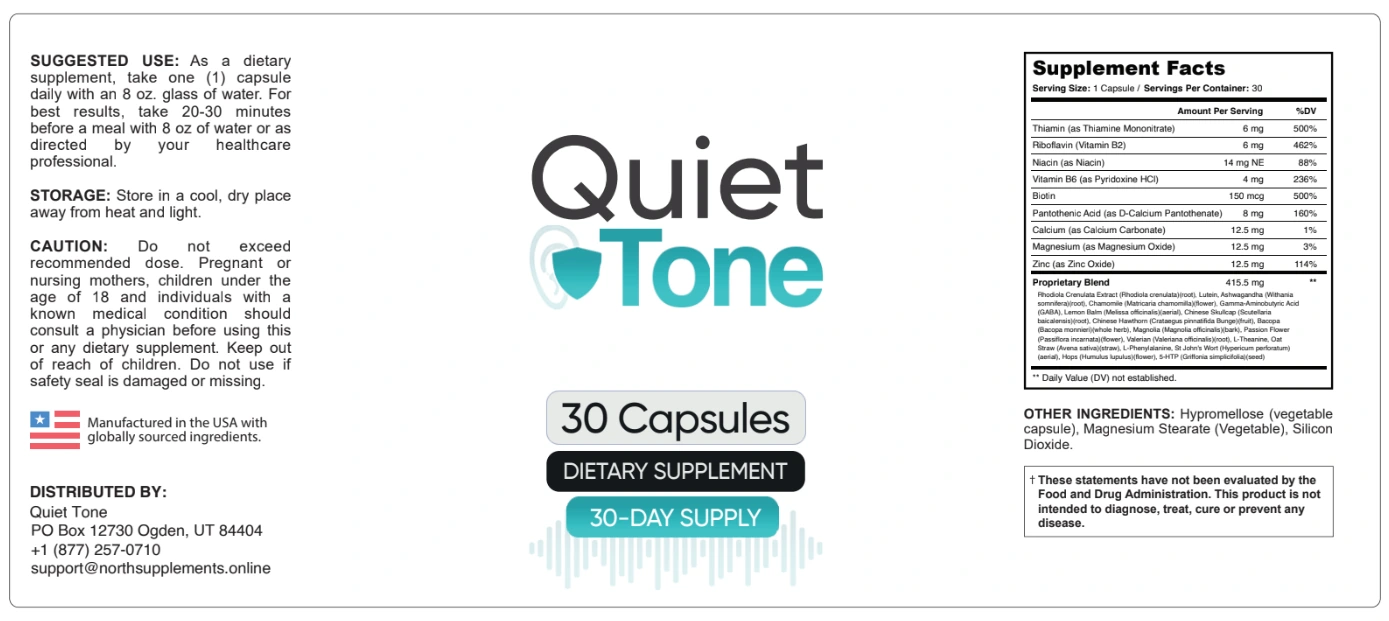
- The label prints no claim about hearing, tinnitus or auditory wellness.
- Zinc is the only panel ingredient with a tinnitus trial. The Cochrane review covers 3 trials and 209 adults and found no evidence of benefit.
- The 2014 AAO-HNS guideline recommends against ginkgo, melatonin, zinc or other dietary supplements for persistent, bothersome tinnitus.
- Fifteen of the 18 blend members have their human evidence in stress, sleep and mood.
- No before-and-after photos, test results or trial of the finished capsule are published.
- Quiet Tone is not FDA approved and is not a treatment for tinnitus.
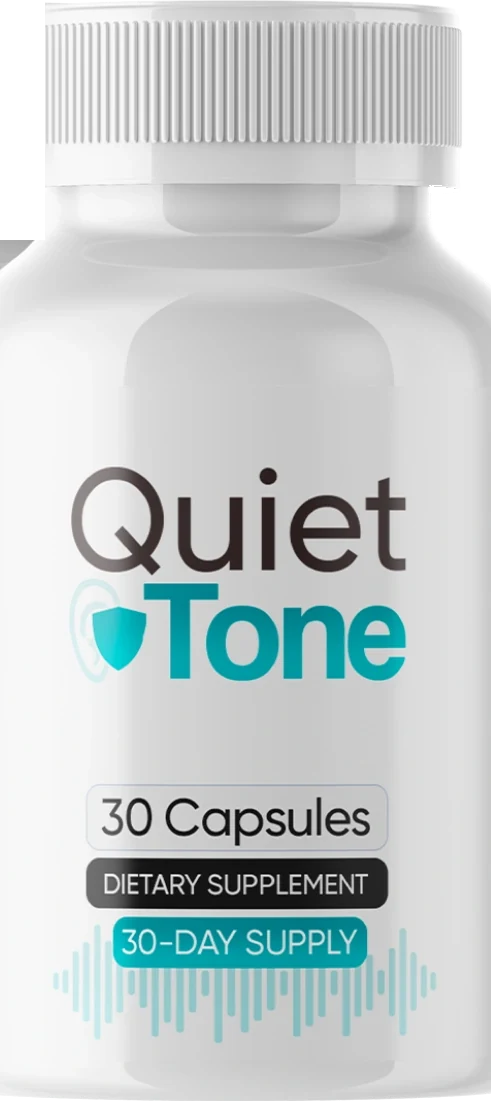
If you want to try it anyway
The order page shows the packs and the 180-day guarantee, which lets you test your own experience at low financial risk.
See today's price and guaranteeDisclosure: Quiettonedaily sells Quiet Tone as its U.S. stocking partner. The button opens the official order page. Check the checkout for current prices, because ours were read on September 19, 2026.
What can an honest page say about 'does it work'?
'Does Quiet Tone work?' hides three questions. Does it work for ringing in the ears? Does it work for anything at all? And what would 'work' even mean for you? Each has a different answer, and only one has a clear published one.
On ringing in the ears, the published answer is no for the supplement route in general and for the one tested ingredient in particular. On anything else, no study of this exact capsule is cited. On what 'work' means, only you can say, which is why the last check is about measuring.
Ringing in the ears can come from many causes, so a hearing assessment comes first. This capsule is not a tinnitus treatment, and it is not approved by the FDA, which approves no supplement. It is not intended to diagnose, treat, cure or prevent any disease. Get seen promptly for one-sided ringing, ringing that pulses with your heartbeat, a sudden change in hearing, or ringing with dizziness or ear pain.
What are the 7 checks?
What does the bottle claim?
Nothing. The label prints the name, the count, the panel, the suggested use, storage, a caution, an origin line, the distributor and the FDA disclaimer. Sales pages may say more about auditory wellness, but the seller's pages are not the label.
What does the national guideline say?
The 2014 AAO-HNS clinical practice guideline recommends against ginkgo, melatonin, zinc or other dietary supplements for persistent, bothersome tinnitus. A 2026 review of over-the-counter tinnitus products reaches a similar place, and the 2026 Korean guideline lands near it.
What happened when the one tested ingredient was tested?
Zinc is the only ingredient on this panel with a tinnitus trial. The Cochrane review pooled 3 trials in 209 adults and found no evidence that oral zinc improves symptoms. Here it is 12.5 mg as zinc oxide, the least absorbed of the common zinc salts: 49.9% against 61.3% for citrate.
What are the 18 blend names studied for?
Fifteen of the 18 blend members, such as ashwagandha, chamomile, valerian, passion flower, lemon balm, hops, GABA, L-theanine and 5-HTP, have human evidence in stress, sleep and mood. Lutein is an eye carotenoid whose landmark trial, AREDS2, measured vision. None is a hearing study.
Do the amounts match the research?
The blend is 415.5 mg for 18 names. Chamomile alone was used at 1,500 mg a day in its anxiety trial, and ashwagandha at 600 mg a day in a 1,002-adult safety trial. No per-ingredient figure inside the blend can be worked out.
Where is the proof of results?
No before-and-after photos, test scores or trials of the finished capsule are published. The seller's review file holds eight named entries with two comment texts, and none is about hearing. Self-reports cannot separate the capsule from sleep, noise, caffeine and stress.
How would you measure it yourself?
Pick something you can count, such as nights woken, time to fall asleep or a simple daily score. Start on a fixed date, record what else changes, and judge at eight weeks. If your goal is quieter ears, repeat the hearing assessment.
How do the facts line up?
| Question | What is published |
|---|---|
| Label claim about tinnitus | None |
| Panel ingredient tested for tinnitus | Zinc only, 3 trials, 209 adults, no evidence of benefit |
| Zinc on this label | 12.5 mg as zinc oxide, 114% Daily Value |
| Guideline position | Recommends against supplements for persistent, bothersome tinnitus |
| Ginkgo in the blend | Not present. The Cochrane ginkgo review found little to no effect |
| Trial of the finished capsule | None cited |
| Before and after photos | None published |
| Guarantee | 180 days from purchase, opened bottles included |
What does help, according to the broader literature?
A 2026 umbrella review of tinnitus treatments maps where the effective help sits. In our reading of it, that is sound-based management, cognitive approaches and correcting a hearing loss where one exists, not supplements. A hearing assessment is the step that tells you which path fits you.
Diet and tinnitus has its own review, and it does not turn a calm-and-sleep capsule into a treatment. Some people report that ringing feels worse when they are exhausted, which is the usual reason a calm-and-sleep product is bought for it. That is a fair reason to talk to a clinician about sleep. It is not a claim that this capsule helps.
Who might still reasonably try it?
Someone who wants a once-daily capsule with nine printed vitamin and mineral rows and a calm-and-sleep style blend, who has had the hearing assessment, who has cleared their medicines with a prescriber, and who understands it is not a tinnitus treatment. For that person the 180-day guarantee makes a trial affordable.
Someone who wants a cure or a fast fix should not be buying it for that. Three of the eight entries in the seller's own file stopped at two bottles because they wanted a faster change.
Sources named on this site
- The 2014 AAO-HNS tinnitus clinical practice guideline
- The guideline's executive summary
- The Cochrane review of zinc for tinnitus
- The Cochrane review of ginkgo for tinnitus
- The 2026 umbrella review of tinnitus treatments
- A 2026 review of over-the-counter tinnitus products
- The 2026 Korean tinnitus guideline
- A review of diet and tinnitus
- MedlinePlus on tinnitus
- The isotope study of zinc forms
- AREDS2
- The 1,500 mg chamomile trial
- The 600 mg ashwagandha safety trial
Frequently asked questions
Does Quiet Tone work?
The label makes no claim and no trial of the finished capsule is cited, so a published yes does not exist. Its blend is built from plants studied for stress, sleep and mood.
Does Quiet Tone work for tinnitus?
Not according to the published evidence we cite. Zinc, the only panel ingredient tested for tinnitus, showed no evidence of benefit in a Cochrane review, and the 2014 guideline recommends against supplements for persistent tinnitus.
What does Quiet Tone do?
The label does not say. Taken as printed, it supplies nine vitamin and mineral rows and an 18-name blend. What it does in any one person is not published.
Are there Quiet Tone before and after results?
No before-and-after photos or test results are published in our sources.
Is Quiet Tone a hearing support formula?
The label does not describe it that way. The seller's pages may point to auditory wellness, but the bottle makes no such claim, and the blend is mostly studied outside hearing.
What should I do about ringing in my ears?
Get a hearing assessment. Seek care quickly for ringing in one ear only, a pulsing sound, a sudden hearing change, or ringing with dizziness or ear pain.
Our view
Our view is plain. The bottle does not claim to help ringing in the ears, the one ingredient tested for it failed, and the national guideline advises against supplements for the problem. Anyone who tells you this capsule fixes tinnitus is going beyond the label and the evidence.
That does not make it worthless. Some people want a simple once-a-day capsule that leans toward stress and sleep. If that is you, buy it for that reason, check your medicines, and let the money-back window protect you. If ringing is the problem, book the hearing assessment first.
Quiet Tone is sold as a dietary supplement. It has no FDA approval, because the agency does not approve supplements before sale, and these statements have not been evaluated by the Food and Drug Administration. Ask your doctor about anything medical.
A cautious way to try it
If you want the capsule for what it is, the order page shows the packs and the 180-day guarantee.
See today's price and guaranteeDisclosure: we are the U.S. stocking partner and we sell Quiet Tone, so we benefit if you order. The button leads to the official order page. Our price figures date from September 19, 2026. The checkout shows what is current.