Quiet Tone Official Website › Blog › Eighteen Names, One Number
Eighteen Names, One Number: How To Read A Proprietary Blend
A proprietary blend is one weight covering several ingredients with no individual amounts printed. It is legal, it is everywhere, and it is the single biggest obstacle to judging a formula. It is also not a total blackout: three useful things can still be read off one, and a fourth can be ruled out entirely.
- A blend row prints one total for several ingredients and no individual amounts.
- The total is a real ceiling: nothing inside the row can weigh more than the row.
- Members appear in descending order of weight, which is a labelling requirement and carries genuine information.
- No per-member figure can be derived, so any website printing one has invented it.
- The decisive test is subtraction: compare the largest single-ingredient trial dose against the whole blend total.
What a proprietary blend actually is
On a Supplement Facts panel, most rows are one ingredient with one weight. A proprietary blend is a different kind of row: it names a group, prints a single weight for the whole group, and then lists the members underneath without a figure against any of them.
The label rules permit this. A manufacturer must name every member and must print the group total, and beyond that the division is treated as a trade secret. The row usually carries a dagger footnote, which says that no Daily Value has been established for it. That footnote is about reference intakes rather than about secrecy, and the two get confused constantly.
What it looks like on a real panel
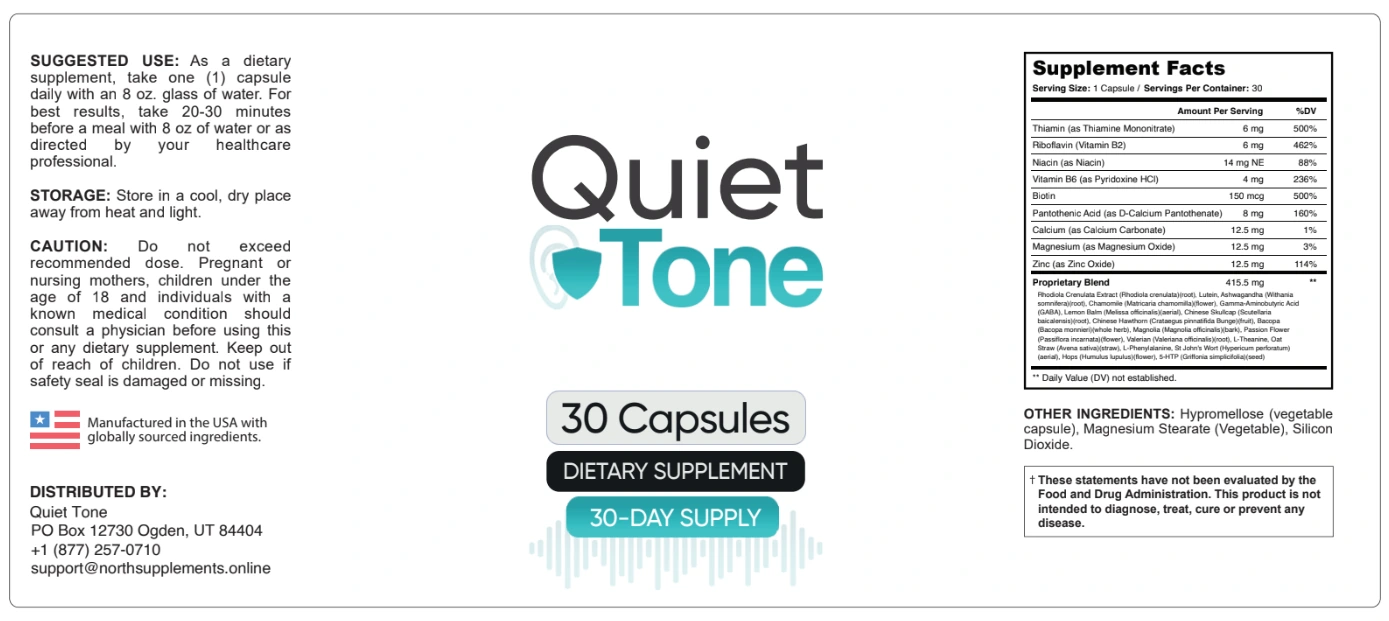
One line reading Proprietary Blend, a weight in milligrams, a dagger where a percentage would be, and then a paragraph of names in smaller type. Sometimes the names are inside the panel and sometimes they sit beneath it. Either is compliant.
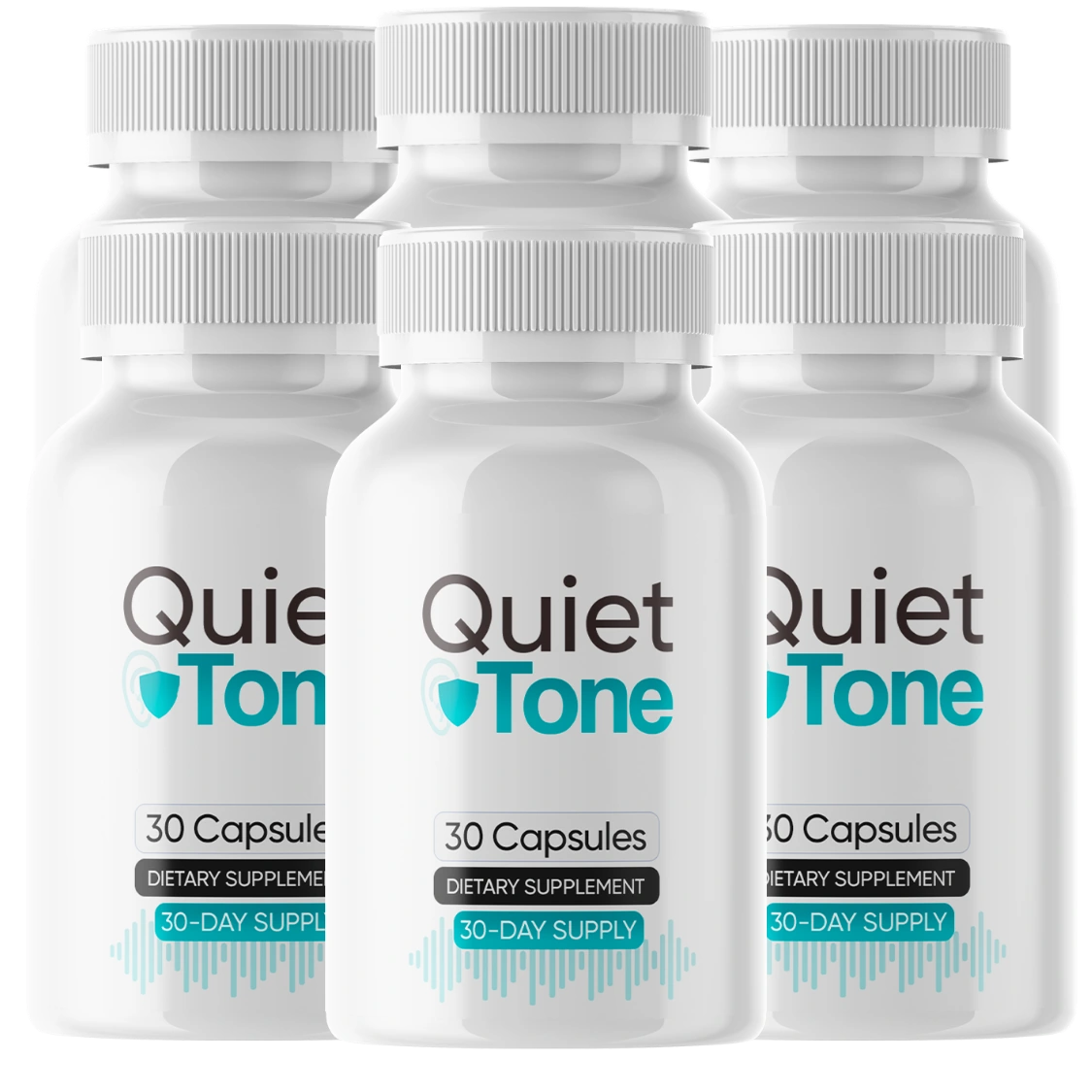
The version that concerns this article is a large one: eighteen names sharing 415.5 mg. That is not the biggest in the category by any means, but the ratio is where the interesting arithmetic lives.
Why a manufacturer would want one
Three reasons are usually given, and they are not equally convincing.
- Protecting a formulation. The stated rationale. A competitor who knows the exact ratios can copy the product. This is a real commercial concern, though it is weakened by the fact that the member list is printed in full and analytical laboratories exist.
- Flexibility between production runs. An undivided blend lets a manufacturer adjust the mix as ingredient prices and supply move, without reprinting the panel. This is rarely stated and is probably the more practical motive.
- Concealing how little of an expensive ingredient is present. The uncharitable reading, and the one buyers assume. It cannot be verified from the outside, which is precisely the problem: a labelling practice that makes a suspicion unfalsifiable generates the suspicion whether or not it is warranted.
Work on how supplement labels are actually read keeps finding the same pattern. A reader who sees a named ingredient assumes it is present at an amount that does something, because that assumption is how every other kind of ingredient list works. A blend is what makes that assumption impossible to check.
The three things you can still read
A blend row is not a blackout. Here is exactly what survives.
| What a blend row tells you | How reliable is it | What follows from it |
|---|---|---|
| The total weight of everything in the row | Exact. It is a printed figure on a regulated panel | A ceiling. Nothing inside the row can weigh more than the total |
| Which members are present | Exact. Every member must be named | You know the species list, if not the amounts |
| The descending order of weight | Required by US labelling rules | The first name weighs at least as much as the second, and the last weighs least |
| The amount of any individual member | Not available, and not derivable | Any figure a website prints for a blend member has been invented |
Four properties of a proprietary blend row, three of which are usable.
Rows one to three are usable and row four is not. Most of the value in reading a blend comes from taking rows one and three seriously rather than giving up at row four.
The single most common mistake is treating the whole row as unknowable and moving on. The total weight is a hard ceiling, and a ceiling is often all the information a decision needs.
The descending-order rule, and its limits
Under US labelling rules the members of a blend appear in descending order of weight. That is a real requirement and it means the printed sequence carries information even though the figures do not.
So on a row listing rhodiola first and 5-HTP last, rhodiola weighs at least as much as every name after it, and 5-HTP weighs no more than any name before it. That much is certain.
What it does not give you
Everything else. The order is compatible with a nearly even split across eighteen members and equally compatible with the first name taking most of the weight and the last sixteen taking a dusting between them. Both distributions produce the same printed sequence.
It is worth being precise about that, because the descending-order rule gets over-interpreted almost as often as it gets ignored. It tells you about rank. It tells you nothing about the size of the gaps between ranks.
How this site treats the Quiet Tone blend row
It prints the 415.5 mg total, the 18 names in the label’s own order with their binomials and plant parts, and the doses the published trials used. It estimates no per-member figure, because the label supports none.
Two bottles $158 · six bottles $294 · 180-day money-back guarantee
Order Quiet Tone On The Official WebsiteOne capsule a day · 30 per bottle · lot QUI-26/QU-5380
The subtraction that settles it
Here is the technique this whole article exists for, and it takes about a minute.
Take the blend total. Take the largest single-ingredient trial dose among the members. Compare them. If one ingredient's own published trial used more than the entire blend weighs, the formula is not reproducing that trial, and no further information is needed to know it.
| Single ingredient | Dose its own trial used | Against a 415.5 mg blend of eighteen |
|---|---|---|
| Chamomile | 1,500 mg a day, as 500 mg three times | More than three times the entire blend, for one member of it |
| Ashwagandha root | 600 mg a day in two divided doses | More than the entire blend, for one member of it |
| Bacopa | 600 mg a day and above carried the effect | More than the entire blend, for one member of it |
| L-theanine | 200 to 400 mg a day across the reviewed trials | Between half and the whole blend, for one member of it |
The right-hand column is subtraction, not estimation. It needs no information the label withholds.
The chamomile trial used 1,500 mg a day of chamomile alone. The ashwagandha safety trial in 1,002 adults used 600 mg a day. The bacopa network meta-analysis of 29 trials put the working-memory effect at 600 mg a day and above. The L-theanine review covers trials at 200 to 400 mg a day.
Three of those four exceed a 415.5 mg blend on their own. The fourth reaches most of it. And there are fourteen further members sharing the same row. No estimate is involved in any of that, which is what makes it the most useful minute a buyer can spend.
Plant parts and binomials, which some labels do print
Now the other direction, because a blend row is not automatically a bad label. A minority of panels print the botanical name and the plant part for each member, and that is real information most of the category withholds.
Valerian root and valerian leaf are different materials with different literatures. Oat straw and oat grain are different materials. Magnolia bark is the part the pharmacology is written about. A label that specifies the part is telling you which material you are getting, and much of the variability between botanical products comes from a supplier using a cheaper part of the same plant.
How to weigh the two against each other
A large undivided blend with specified parts and binomials is a strange combination: generous with one kind of information and silent about another. The generous half is worth credit and it does not cancel the silent half.
The practical rule is that specification tells you what the ingredient IS, and a figure tells you how much of it there is. You need both to judge a formula, and a label giving you one of the two is halfway there rather than nowhere.
What a blend is not being accused of
- A blend is not illegal, and a manufacturer using one is complying with the rules rather than evading them.
- A blend does not mean the ingredients are absent. Every named member has to be present.
- A blend does not mean the product is low quality. Some carefully made formulas use one.
- A blend does not mean the seller is hiding something specific. It means nobody outside can tell either way, which is a different and more honest complaint.
- A small number of members inside a generous total is a very different proposition from eighteen inside a modest one, and lumping the two together is lazy.
The fair summary is that a proprietary blend shifts the burden. A quantified panel lets a buyer check a formula against the research; a blend asks the buyer to take the formulation on trust. Whether that trust is warranted is a judgement, and the subtraction above is the best evidence available for making it.
Five questions to ask of any blend row
- What is the total, and how many members share it? Those two numbers together are most of the story.
- What is the largest single-ingredient trial dose among the members? If it exceeds the total, you already have your answer.
- Are the members named with a species and a plant part? If yes, the label is giving you more than most.
- Which name is first? It weighs the most, and if the first name is a cheap filler botanical that is worth noticing.
- Is there a quantified section of the panel too? Many labels split: some rows with figures, one blend without. The quantified rows can still be checked normally.
Run those five and a blend row stops being a wall. It becomes a row with a ceiling, a ranking and a specification, which is enough to make a decision on.
References
- Alsawadi A. The perception filler: a proposed conceptual framework for ingredient-interpretation gaps in food supplements. J Nutr. 2026;156(10):101803. PMID 42660500. https://pubmed.ncbi.nlm.nih.gov/42660500/
- Mao JJ, Xie SX, Keefe JR, Soeller I, Li QS, Amsterdam JD. Long-term chamomile (Matricaria chamomilla L.) treatment for generalized anxiety disorder: a randomized clinical trial. Phytomedicine. 2016;23(14):1735-1742. The trial dose was 1,500 mg a day, as 500 mg three times daily. PMID 27912875. https://pubmed.ncbi.nlm.nih.gov/27912875/
- Pakhale K, Salve J, Ademola J, et al. Safety of 8-week administration with ashwagandha (Withania somnifera) root extract in adults with stress and anxiety. Phytother Res. 2026;40(8):5005-5015. The trial dose was 600 mg a day in two divided doses, in 1,002 adults. PMID 41943502. https://pubmed.ncbi.nlm.nih.gov/41943502/
- Tiemtad P, Ingkaninan K, Temkitthawon P, et al. Comparative effects of Bacopa monnieri and Ginkgo biloba on cognitive functions: a systematic review and network meta-analysis. Phytomedicine. 2026;153:157915. Twenty-nine trials, 2,107 people; the working-memory benefit belonged to doses of 600 mg a day and above. PMID 41678913. https://pubmed.ncbi.nlm.nih.gov/41678913/
- Williams JL, Everett JM, D'Cunha NM, et al. The effects of green tea amino acid L-theanine consumption on the ability to manage stress and anxiety levels: a systematic review. Plant Foods Hum Nutr. 2020;75(1):12-23. The reviewed trials used 200-400 mg a day. PMID 31758301. https://pubmed.ncbi.nlm.nih.gov/31758301/