Quiet Tone Official Website › Blog › Proprietary Blend Meaning: 7 Checks
Proprietary Blend Meaning: 7 Checks on the Quiet Tone Row
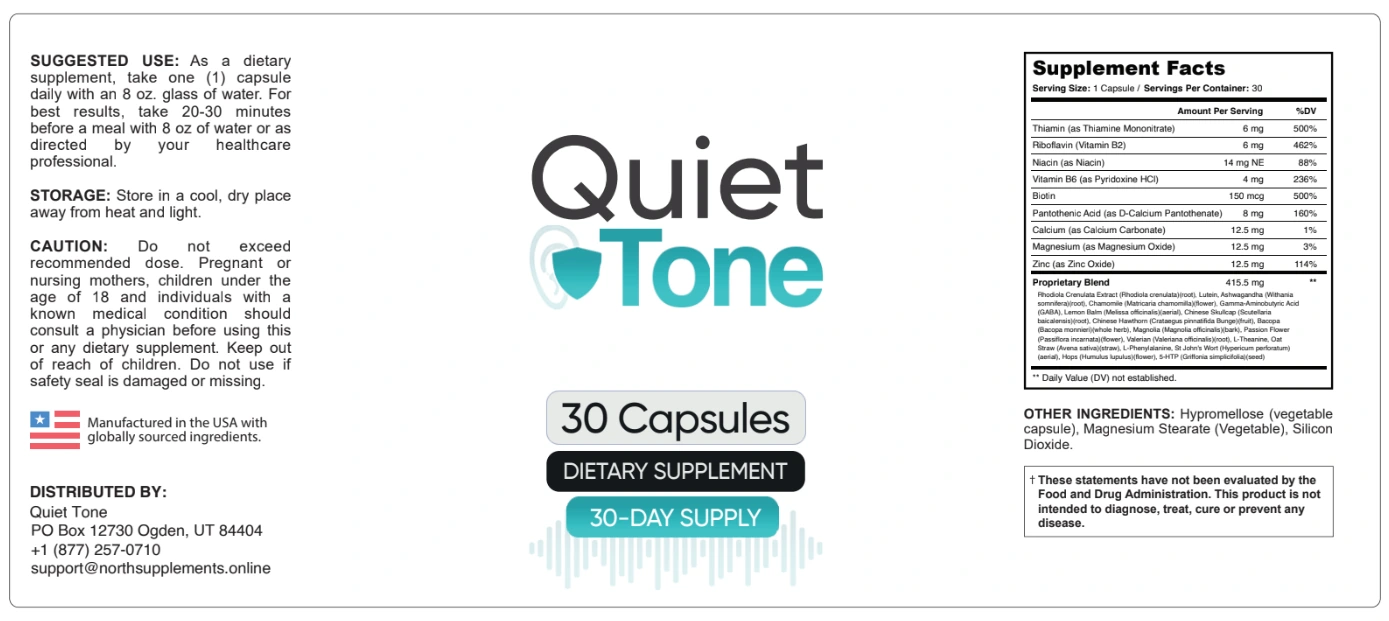
A proprietary blend is a group of ingredients listed under one total weight, with no amount for each member. Quiet Tone shows 415.5 mg for 18 names. Seven checks, from the total to the order of the names, tell you what a blend can and cannot reveal.
- A proprietary blend is legal. Makers may print a total weight instead of each amount.
- Members must be listed in descending order of weight, so the first names are the largest.
- Quiet Tone's blend is 415.5 mg for 18 names. No single amount is printed or can be derived.
- The blend row has no Daily Value established.
- Split evenly, 415.5 mg across 18 names is about 23 mg each. That is an average, not a fact about any ingredient.
- Several single-ingredient trial doses, such as chamomile at 1,500 mg and ashwagandha at 600 mg, exceed the whole blend by themselves.
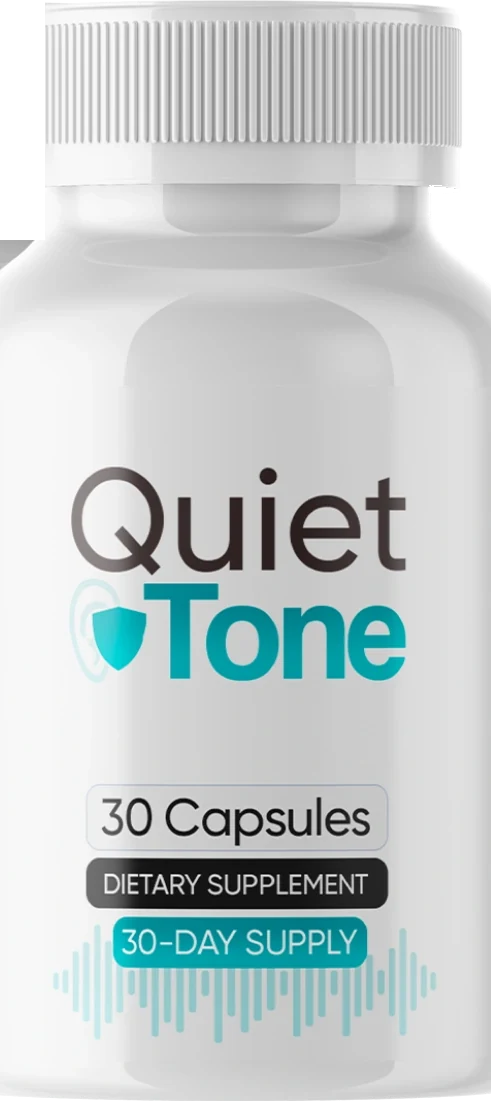
See the blend on the real label
The order page shows the packs and the 180-day guarantee. The blend itself is printed on the bottle, so you can run the checks below on the real thing.
See today's price and guaranteeDisclosure: Quiettonedaily is the U.S. stocking partner for Quiet Tone and sells it. This button goes to the official order page. Prices were last read on September 19, 2026, so confirm them at checkout.
What does 'proprietary blend' mean on a label?
A proprietary blend is a group of ingredients that share one line and one total weight. The maker keeps the split between them private. In the United States the rules allow this, provided the members are listed in descending order of predominance.
That last rule is the useful one. It means you can learn something from the order even when you cannot learn the amounts. A blend is not a trick, and it is not a mistake. It is a commercial choice about how much to reveal.
People also ask why makers use blends. A seller may say it protects the formula. A careful buyer notices that it also hides how much of each ingredient is there. A label cannot tell you which reason applies. That is the whole problem with a blend, and the reason for the seven checks below.
What are the 7 checks for any proprietary blend?
Find the total
Quiet Tone's blend is 415.5 mg. Everything else follows from that one figure. If a blend gives no total, treat that as a bigger gap than a missing split.
Count the members
There are 18 names in this blend. More members in a fixed total means a smaller average share. Divide the total by the count: 415.5 divided by 18 is about 23 mg. It is a crude average, but it is a useful floor for your expectations.
Read the order
Rhodiola is printed first and 5-HTP last. By the descending rule, the first names are larger than the average and the last ones smaller. How much larger is not published.
Check the plant parts
This label gives the Latin name and the part for most members: root, flower, aerial parts, fruit, bark, seed or whole herb. Many labels skip that. It is a point in this label's favour. It is not a lab confirmation.
Compare with the trial dose
Pick one member and look up the dose its own trial used. Chamomile ran at 1,500 mg a day. Ashwagandha ran at 600 mg a day. Bacopa's benefit sat at 600 mg a day and above. Each is larger than the whole blend. The comparison needs no estimate of any single member.
Ask what is not in the blend
The nine nutrient rows print real amounts. A blend sits beside them without one. Notice which ingredients the maker chose to print and which it chose to pool.
Look for outside proof
Is there an identity or potency report? For Quiet Tone none is published. The lot and certificate references are filing references, not lab proof.
How do the seven checks look on the Quiet Tone row?
| Check | Quiet Tone result |
|---|---|
| Total | 415.5 mg |
| Members | 18 |
| Average share | About 23 mg, if split evenly |
| First and last names | Rhodiola Crenulata Extract first, 5-HTP last |
| Plant parts given | Yes, for the plants. GABA, L-theanine, L-phenylalanine and lutein are not plants |
| Chamomile trial dose | 1,500 mg a day, more than three times the whole blend |
| Ashwagandha trial dose | 600 mg a day, more than the whole blend |
| Outside proof | No analytical report published |
The average is simple division, 415.5 divided by 18. The real split is not published.
Notice what the table does not say. It does not say the blend does nothing. It says no one can know from the label how much of each plant is there, and that the whole blend is smaller than several single-ingredient trial doses.
Is a proprietary blend always a bad sign?
No. A blend can be a sensible way to build a formula, and plenty of good products use one. The honest position is narrower. A blend removes the buyer's ability to check. That is a cost, and you should weigh it against price and the refund terms.
With Quiet Tone the cost is visible. You get nine rows you can verify and one row you cannot. You also get a 180-day guarantee, which gives you time to try the capsule without the formula being proven. Both facts belong in the same sentence.
An unlisted amount can hide an interaction. This blend includes St John's wort and 5-HTP, and neither amount is published, so a prescriber has to judge by ingredient name. Adults 18 and over only, with a physician's advice first for anyone pregnant, nursing or living with a known condition. Quiet Tone is not FDA approved, as no supplement is.
How do you shop for supplements without proprietary blends?
Some buyers want a product with no blend at all. The searches 'supplements without proprietary blends' and 'no proprietary blend supplement' say so. Quiet Tone is not that product, and we will not pretend it is.
- Look for panels where every ingredient has its own printed amount.
- Prefer products that name the form of each mineral, as the brackets here do.
- Compare each printed amount with the dose in the published trials.
- Ask the seller for an identity or potency report and note the answer.
- Buy through a channel with a clear refund window.
If you want one plant at a studied dose, a single-ingredient product is usually the cleaner choice. If you want a single capsule that carries a spread of plants and accept the trade-off, a blend is a decision you make with your eyes open.
Sources named on this site
Frequently asked questions
What is a proprietary blend?
It is a group of ingredients printed under one total weight, with no amount shown for each member. US rules allow it if the members are listed in descending order by weight.
What does proprietary blend mean on Quiet Tone?
It means 18 names share 415.5 mg and no individual amount is printed. The first names, such as rhodiola, are larger than the last, such as 5-HTP, but by how much is not published.
Why do supplements use proprietary blends?
A seller may say it protects the formula. The effect for the buyer is that the amounts cannot be checked. A label cannot tell you which reason applies.
Are there supplements without proprietary blends?
Yes. Look for panels that print an amount for every ingredient. Quiet Tone is not one of them, because its blend has no split.
Does the blend have a Daily Value?
No. The panel notes that no Daily Value is established for the blend row.
Is the Quiet Tone blend unsafe?
Nothing we cite says the finished blend is unsafe. Its amounts are unpublished, and some members have interaction records. St John's wort affects many prescription medicines and 5-HTP overlaps with serotonergic antidepressants, so check with your prescriber.
Our view
A blend is a closed door with a list of names on it. You can read the names, and you can read the weight of the whole room, but you cannot see how much of each thing is inside. Quiet Tone uses that door on its bottom row.
Our advice: do the seven checks, write down what you learned, and let the refund window carry the risk of the part you cannot see. Do not read more into the list of names than the label gives you.
As with every supplement, there is no FDA approval behind Quiet Tone, and the Food and Drug Administration has not evaluated what is written here. For medical advice, see a doctor.
Run the checks on a real bottle
If you would like to try Quiet Tone and read the blend row yourself, the order page lists the packs and the 180-day guarantee.
See today's price and guaranteeDisclosure: this site is a stocking partner that sells Quiet Tone. The button goes to the official order page. Pack prices were last read on September 19, 2026 and can change.