Quiet Tone Official Website › Blog › Quiet Tone Interactions: 5 Steps
Quiet Tone and Medication Interactions: 5 Steps to Check
Two Quiet Tone ingredients have documented drug interactions. St John's wort lowers blood levels of many medicines, including hormonal contraception and transplant drugs. 5-HTP overlaps with serotonergic antidepressants. Follow these five steps and speak to your prescriber before the first capsule, not after.
- St John's wort induces CYP3A4, which speeds the clearance of a long list of drugs.
- Documented consequences include reduced hormonal contraceptive levels with breakthrough bleeding, and loss of cyclosporine levels in transplant patients.
- 5-HTP is a serotonin precursor and overlaps with serotonergic antidepressants.
- Valerian and hops add to the effect of alcohol and other sedatives.
- Biotin at 150 mcg can distort lab immunoassays, including troponin and thyroid panels.
- Never stop or change a prescribed medicine on your own because of a supplement.
Before you order
If your medicine check is clear with your prescriber, the order page shows the packs and the 180-day guarantee.
See today's price and guaranteeDisclosure: Quiettonedaily is the U.S. stocking partner for Quiet Tone and sells it. This button goes to the official order page. Prices were last read on September 19, 2026, so confirm them at checkout.
Why does a calming blend need a medicine check?
Most vitamins are quiet in the body. Plants are not always quiet. A few of them act on the liver enzymes that clear medicines from the blood, and some change the same brain chemicals that prescription drugs change.
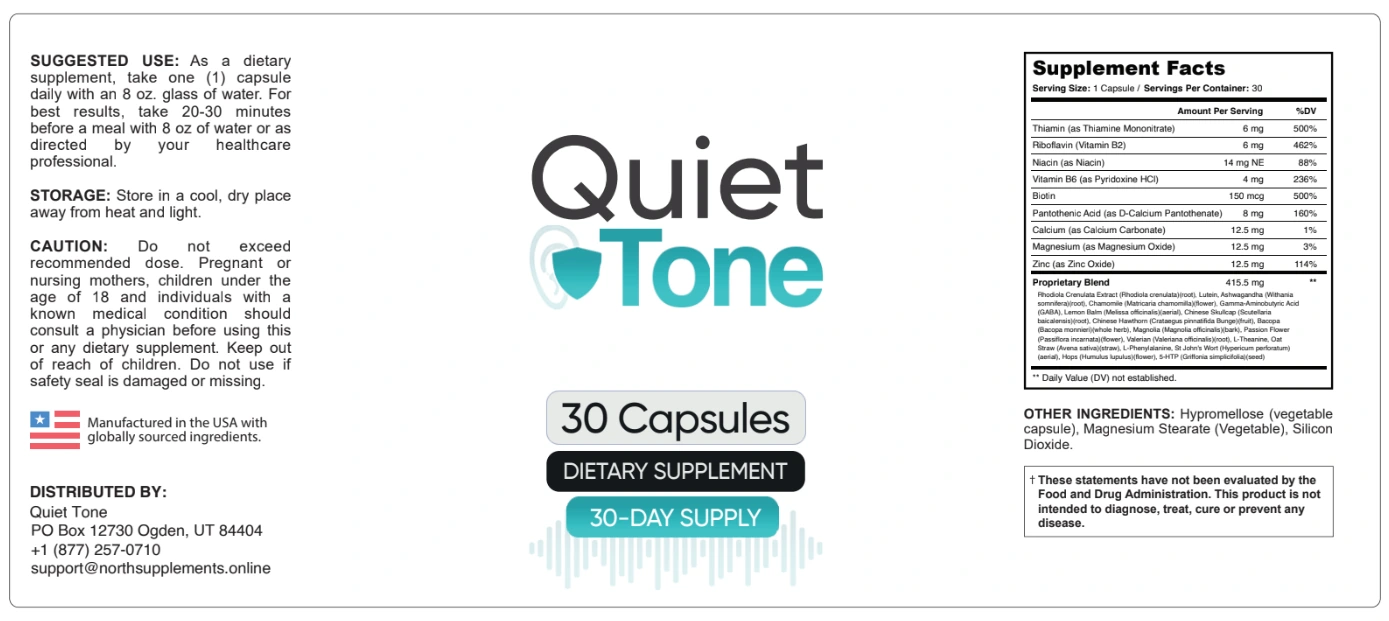
Quiet Tone's panel mixes both groups. Two of its 18 blend members have a real interaction record, and the label itself asks anyone with a known medical condition to consult a physician first. The steps below turn that into something you can do in one sitting.
General information only. Do not stop or change a prescribed medicine yourself. Ask the person who prescribes it, or a pharmacist, about the whole blend before the first capsule. Quiet Tone is for adults 18 and over, and no supplement is FDA approved.
What are the 5 steps for checking your medicines?
Write down everything you take
List prescriptions, over-the-counter medicines, other supplements and any multivitamin. Add alcohol and sedating antihistamines. A complete list is what makes the other four steps useful.
Look for the St John's wort classes
St John's wort induces the CYP3A4 enzyme and the P-glycoprotein transporter. Hormonal contraception is the group that affects the most people: reduced hormone levels and breakthrough bleeding are reported. Transplant immunosuppressants are the most serious: cyclosporine levels can fall far enough to threaten a graft. Other drugs cleared the same way are affected too, which is why you should name the ingredient to your prescriber.
Look for serotonergic medicines
5-HTP raises serotonin availability. Serotonin syndrome has been reported where supplements are combined with serotonergic antidepressants. If you take one, this is a conversation to have before you start, not after.
Count the sedatives
Valerian and hops are studied as calming plants, and passion flower has been studied before surgery. Additive sedation is the expected direction with alcohol, prescription sedatives and antihistamines. Plan for that if you drive.
Tell the lab and the surgeon
Biotin at 150 mcg can distort immunoassays, including troponin and thyroid tests. Say what you take at any blood draw. Before a scheduled operation, tell the team about every supplement.
Which ingredient interacts with which medicines?
| On the panel | Interacts with | What is documented |
|---|---|---|
| St John's wort | Hormonal contraception | Breakthrough bleeding and reduced hormone levels, gathered in a systematic review |
| St John's wort | Transplant immunosuppressants | Cyclosporine levels fall enough to threaten a graft |
| St John's wort | CYP3A4 and P-glycoprotein substrates | Faster clearance of a long list of drugs |
| 5-HTP | Serotonergic antidepressants | Serotonin syndrome case reports |
| Valerian and hops | Sedatives and alcohol | Additive sedation is the expected direction |
| Biotin | Laboratory immunoassays | Distorted results, including troponin and thyroid panels |
Drawn from the published records named in the sources below. The amount of each plant inside the blend is not published.
One more point sits beside the table. A wider 2026 review of herbs and cytochrome P450 covers other plants on this panel at the level of theory rather than reported cases. We name the documented ones precisely because a vague 'herbs may interact' warning gives you nothing to act on.
Does a small, unknown amount of St John's wort make it safe?
No one can say that. The amount of each blend member is not published, so there is no number to compare with the doses in the interaction studies. 'Probably small' is a guess, and for a transplant drug or a contraceptive a guess is not good enough.
That is why the useful rule here is a simple one. If you are in any of the groups above, take the bottle, or a photo of the label, to the person who prescribed your medicine. Ask by ingredient name. Let them decide.
What should you bring to the conversation?
Prescribers and pharmacists can answer an interaction question quickly if you give them the right things. Bring the label, or a clear photo of the back of the bottle, so they can read the blend list and the plant parts themselves. Bring your medicine list from step 1.
- Ask: 'This capsule contains St John's wort. Does that matter for my medicines?'
- Ask: 'It also contains 5-HTP. Does that overlap with anything I take?'
- Ask: 'It contains valerian and hops. Is that a problem with my sedatives or with alcohol?'
- Ask: 'It contains biotin. Should I stop it before my next blood test?'
Say plainly that the amount of each plant is not published. A good clinician will not guess. They will either give you a clear yes or no, or tell you to wait. Write the answer down, with the date, in the same place as your notes.
The label itself points the same way. Its caution asks pregnant or nursing mothers, children under 18 and anyone with a known medical condition to consult a physician before use, and it says to keep the bottle out of reach of children.
Who else should ask before starting?
- Anyone under 18, pregnant or nursing, as the label states.
- Anyone with a known medical condition, as the label states.
- Anyone with liver disease or taking medicines that affect the liver, because rare liver injury has been reported for ashwagandha and Chinese skullcap.
- Anyone taking a separate multivitamin, because the calcium, magnesium and zinc overlap and compete.
If you cannot get an answer quickly, the safe default is to wait. The 180-day guarantee means a delay costs you nothing but time.
Sources named on this site
- NCCIH on St John's wort
- The CYP3A4 induction trial
- The oral contraceptive pharmacokinetic study
- A systematic review of St John's wort with hormonal contraception
- The transplant case series
- A review of St John's wort pharmacokinetic interactions
- A review of 5-HTP supplementation
- A serotonin syndrome case involving supplements
- NCCIH on valerian
- A 2026 review of sedative and anxiolytic herbal supplements
- A 2026 review of herbs and cytochrome P450
- The review of biotin interference in lab tests
Frequently asked questions
Does Quiet Tone interact with medications?
Two ingredients do. St John's wort lowers blood levels of many prescription medicines, including hormonal contraception and transplant drugs. 5-HTP overlaps with serotonergic antidepressants. Ask your prescriber before the first capsule.
Is Quiet Tone safe with birth control?
St John's wort is in the blend, and reduced contraceptive levels with breakthrough bleeding are documented. Talk to your prescriber before starting. Do not rely on a supplement page to decide.
Can I take Quiet Tone with antidepressants?
5-HTP raises serotonin availability, and serotonin syndrome has been reported with serotonergic medicines. Anyone on an antidepressant should ask the prescriber first.
Is Quiet Tone safe with blood pressure or heart medicine?
St John's wort induces CYP3A4, which affects several cardiac medicines. Anyone on one should raise the bottle with their prescriber.
Can Quiet Tone affect a blood test?
Yes. Biotin at 150 mcg can distort some immunoassays, including troponin and thyroid panels. Tell the clinician what you take.
What about alcohol?
Valerian and hops add to the effect of alcohol and other sedatives, so take extra care and avoid driving if you feel drowsy.
Our view
Our view is that the interaction list is short, specific and well documented, and that makes it easier to deal with than a general warning. Two ingredients, a handful of drug groups, one lab effect.
If none of them applies to you, the step is quick. If one does, it may be the most important step you take with this product. Either way, ask by name and let your prescriber decide.
Reminder: Quiet Tone is a dietary supplement, and the FDA has not approved it. The FDA approves no supplement before sale. These statements have not been evaluated by the Food and Drug Administration. For any medical question, ask your doctor.
Check first, then decide
When your prescriber is happy, the order page shows the packs and the 180-day guarantee.
See today's price and guaranteeDisclosure: this site is a stocking partner that sells Quiet Tone. The button goes to the official order page. Pack prices were last read on September 19, 2026 and can change.