Quiet Tone Official Website › Blog › St John’s Wort In A Sleep Blend
St John’s Wort In A Sleep Blend: Who Has To Check First
St John’s wort is the most interaction-prone botanical sold in the United States, and it turns up routinely inside calm-and-sleep blends with nothing on the front of the box to say so. This is the article that costs this website the most, and it is the one most worth reading.
- St John’s wort induces the enzyme CYP3A4, which speeds the clearance of many prescription medicines.
- Hormonal contraception is the most widely relevant consequence: reduced hormone levels and breakthrough bleeding are documented.
- Transplant immunosuppressants are the most serious: ciclosporin levels can fall far enough to threaten a graft.
- It appears inside blends where it is named but not quantified, so the exposure cannot be calculated from the label.
- The action is specific and it is not complicated: take the bottle to whoever writes your prescriptions.
What St John’s wort is
Hypericum perforatum, a yellow-flowered plant whose aerial parts are used in supplements and, in some countries, in licensed medicines for low mood. It has a substantial evidence base of its own, which is part of why it ends up in so many blends.
It also has the most thoroughly documented interaction profile of any botanical on sale. The NCCIH summary is the plain-language starting point and it leads with the interactions rather than with the uses, which tells you how the balance is generally judged.
Why it turns up in sleep and calm formulas
Because a formulator building a mood-and-sleep blend reaches for the ingredients with mood literature behind them, and this is one of the best known. In a blend of fifteen or twenty botanicals it is one name among many, and it usually receives no more prominence than the chamomile beside it.
That is the structural problem. The ingredient with by far the most significant interaction profile in the row is presented identically to the ingredients with none.
What enzyme induction means, in plain terms
The liver clears most medicines using a family of enzymes, and CYP3A4 does more of that work than any other single member. A very large fraction of prescription drugs are its substrates.
Induction means increasing the amount of an enzyme a body makes. A controlled trial of CYP3A4 induction established that St John’s wort does this. The consequence is mechanical: more enzyme means faster clearance, faster clearance means lower blood levels, and lower blood levels mean a medicine that was working at a given dose may stop working at that dose.
Why that is worse than it sounds
Because nothing feels different. An interaction that causes a side effect announces itself. An interaction that quietly lowers a drug level does not, and the first sign is the medicine failing to do its job.
That is why this particular interaction generates case reports rather than complaints. The pharmacokinetic review literature covers the range of substrates affected, which includes several cardiac and antiviral medicines alongside the two classes below.
The drug classes with a documented interaction
Four, and they are specific classes with published records rather than a general warning about herbs.
| Medicine class | What has been documented | Why it happens |
|---|---|---|
| Hormonal contraception | Reduced hormone levels and breakthrough bleeding, in pharmacokinetic work and a systematic review of the case record | Faster clearance of the hormone through enzyme induction |
| Transplant immunosuppressants | Ciclosporin levels falling far enough to threaten a graft, in a published case series | The same induction, applied to a drug with a narrow therapeutic window |
| Several cardiac and antiviral medicines | Altered exposure, covered in the pharmacokinetic review literature | Shared metabolic route with the substrates above |
| Serotonergic antidepressants | An additive pharmacodynamic concern rather than an enzyme one | A different mechanism, and one that also applies to 5-HTP in the same blends |
Every row here is a documented interaction with a named class, not a general caution about herbs.
Naming them precisely is more useful than a blanket caution, because a blanket caution gives a reader nothing to act on. Somebody on a statin and somebody on ciclosporin are in very different positions, and a label that says consult your physician treats them identically.
Contraception, which affects the most people
This is the interaction with the widest reach, because hormonal contraception is one of the most commonly taken prescriptions there is and its users are not a population that thinks of itself as medically complicated.
A pharmacokinetic study documented reduced exposure to the hormones in a combined oral contraceptive alongside breakthrough bleeding, and a systematic review gathers the wider case record in one place.
What that means in practice
Breakthrough bleeding is the visible sign and it is the one most often reported. It is also not the outcome that matters most, and the reason this article exists rather than a line in a caution box is that an unintended pregnancy is a consequence a supplement label should not be able to cause quietly.
The action is straightforward: anybody relying on hormonal contraception who finds this ingredient on a supplement label should raise it with their prescriber or pharmacist before the first capsule, not after a bleed.
Transplant medicine, which is the most serious
A published case series recorded ciclosporin levels falling far enough to threaten a transplanted organ in patients who had started St John’s wort. Transplant teams ask about this ingredient by name, which is a reasonable measure of how seriously the field takes it.
The mechanism is the same induction described above, applied to a drug with a narrow therapeutic window. A medicine that is only effective within a narrow band of blood levels is a medicine where a twenty per cent reduction is not a minor adjustment.
Anyone in that position almost certainly already knows. The reason it is here is the group who do not: family members buying a sleep supplement as a gift, and anyone assuming that an ingredient available without a prescription cannot interact with one.
Where this ingredient sits on the Quiet Tone panel
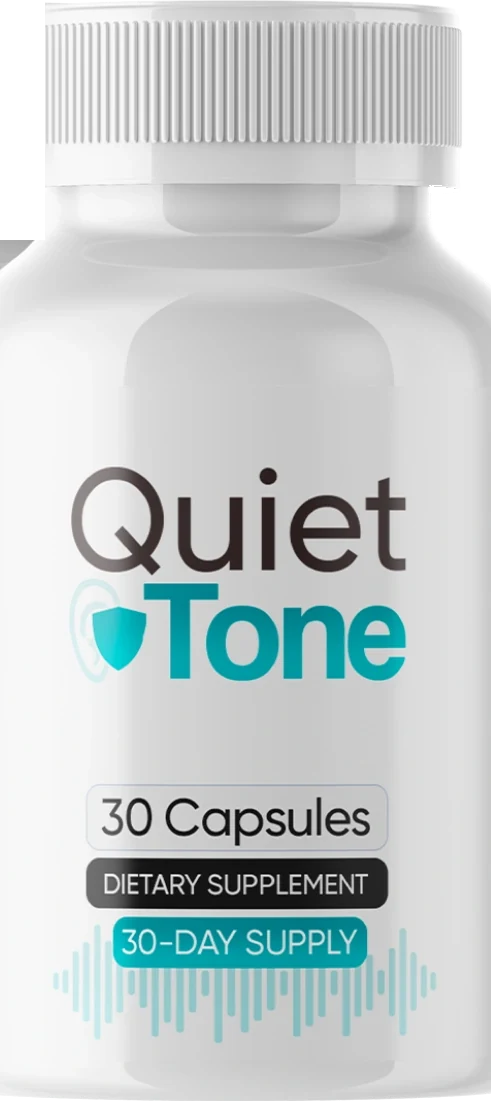
Inside the 415.5 mg blend, sixteenth of 18 names, specified as the aerial part with no amount split out. It is named on the label and this site names it on every page where it is relevant, including the home page.
Two bottles $158 · six bottles $294 · 180-day money-back guarantee
Order Quiet Tone On The Official WebsiteOne capsule a day · 30 per bottle · lot QUI-26/QU-5380
Why a blend makes this harder, not easier
A quantified label would at least let a pharmacist estimate the exposure. A blend does not, and that changes the nature of the conversation.
A buyer can say the ingredient is present. They cannot say how much, because the label does not divide the total and no arithmetic recovers it. The pharmacist is then in the position of advising on an unknown exposure, which reasonably pushes the advice toward caution.
- The descending order of the blend tells you the rank of the ingredient and nothing about the size of the gaps.
- A late position in a long blend suggests a small amount, and suggests is doing real work in that sentence.
- Enzyme induction is not a simple dose-response relationship, so a small amount is not automatically a safe amount.
- The honest position is that the exposure is unknown and the ingredient is present, which is exactly what to tell a pharmacist.
- A blend containing this ingredient is a blend where a quantified label would be more valuable than usual.
What to do, specifically
Four situations, four questions, four people to ask.
| If you take | The question to ask | Who to ask |
|---|---|---|
| Hormonal contraception of any kind | Does this ingredient affect my cover, and what should I do about it? | The prescriber or the pharmacist who dispenses it |
| A transplant immunosuppressant | This is on my supplement label; what do you want me to do? | The transplant team, before the first capsule |
| An antidepressant | There is 5-HTP and St John’s wort here; is this a problem? | The prescriber |
| Anything else on prescription | Here is the full ingredient list; is any of it a problem with what I take? | The pharmacist, who is the most accessible of the three |
Taking the bottle to the appointment is more useful than describing it, because the ingredient list is the document that matters.
Take the bottle rather than describing it. The ingredient list on the back is the document that matters and it is faster to hand over than to recite. A pharmacist is the most accessible of the three and is generally the best first stop.
One more ingredient belongs in the same conversation. 5-HTP is a direct serotonin precursor and turns up in the same blends. It is a different mechanism from the enzyme induction described here, it overlaps with serotonergic antidepressants, and it is worth raising in the same sentence rather than a separate appointment.
What this article is not saying
- It is not saying the ingredient is dangerous in general. Most people take nothing it interacts with.
- It is not saying the label is hiding it. The name is printed, as the rules require.
- It is not saying a blend containing it should be avoided by everybody. It is saying a specific and identifiable group has a question to ask first.
- It is not medical advice, and the point of the whole article is to route a reader to somebody who can give some.
- It is not an argument against the rest of the formula, which has nothing to do with this.
The reason a site selling a bottle publishes this at length is simple enough. An interaction that does not announce itself is exactly the kind a buyer needs told in advance, and a page that buries it in a caution box has technically disclosed it and practically not.
References
- Markowitz JS, Donovan JL, DeVane CL, et al. Effect of St John's wort on drug metabolism by induction of cytochrome P450 3A4 enzyme. JAMA. 2003;290(11):1500-4. PMID 13129991. https://pubmed.ncbi.nlm.nih.gov/13129991/
- Murphy PA, Kern SE, Stanczyk FZ, Westhoff CL. Interaction of St. John's wort with oral contraceptives: effects on the pharmacokinetics of norethindrone and ethinyl estradiol, ovarian activity and breakthrough bleeding. Contraception. 2005;71(6):402-8. PMID 15914127. https://pubmed.ncbi.nlm.nih.gov/15914127/
- Berry-Bibee EN, Kim MJ, Tepper NK, Riley HE, Curtis KM. Co-administration of St. John's wort and hormonal contraceptives: a systematic review. Contraception. 2016;94(6):668-677. PMID 27444983. https://pubmed.ncbi.nlm.nih.gov/27444983/
- Ernst E. St John's wort supplements endanger the success of organ transplantation. Arch Surg. 2002;137(3):316-9. PMID 11888457. https://pubmed.ncbi.nlm.nih.gov/11888457/
- Zhou S, Chan E, Pan SQ, Huang M, Lee EJ. Pharmacokinetic interactions of drugs with St John's wort. J Psychopharmacol. 2004;18(2):262-76. PMID 15260917. https://pubmed.ncbi.nlm.nih.gov/15260917/
- National Center for Complementary and Integrative Health. St. John's Wort. National Institutes of Health. Read 19 September 2026. https://www.nccih.nih.gov/health/st-johns-wort