Quiet Tone Official Website › Blog › Zinc Oxide Or Zinc Citrate
Zinc Oxide Or Zinc Citrate: What The Salt Changes
Every mineral on a supplement panel arrives attached to something else, and the something else is printed in brackets. Most buyers read past it. On zinc the bracket is worth about eleven percentage points of absorption, and it is also the clearest single signal of where a formulation budget went.
- Minerals are never present as the bare element. They arrive as a salt, and the salt is named in brackets on the panel.
- A stable-isotope study put zinc oxide at 49.9% absorbed against 61.3% for citrate and 60.9% for gluconate.
- On a 12.5 mg row that difference is roughly 1.4 mg of absorbed zinc.
- Oxide is the cheapest common form, so it is the default on multi-ingredient panels where cost per row matters.
- None of this changes the tinnitus answer: the Cochrane review of zinc for that use found no evidence of benefit, in whichever salt.
The bracket nobody reads
A mineral cannot be put in a capsule on its own. Elemental zinc is a metal, and what goes into a supplement is a zinc compound: zinc oxide, zinc citrate, zinc gluconate, zinc picolinate, zinc bisglycinate and a handful of others.
The panel is required to say which. That is what the bracket after the mineral name is doing, and it is one of the few places on a label where a single word changes the arithmetic.
Why the milligram figure is still honest
The weight printed on a panel is elemental zinc, not the weight of the salt. So 12.5 mg of zinc as zinc oxide really does mean 12.5 mg of zinc; the oxide portion is additional and is not counted.
That is worth stating because a common misunderstanding has the salt inflating the figure. It does not. What the salt changes is what happens after the capsule is swallowed.
The study that put numbers on it
A stable-isotope study compared the common zinc salts in the same design, which is the part that matters: comparing absorption figures taken from three separate papers with three separate methods is how most of the confusion in this area is generated.
| Zinc salt | Fractional absorption measured | Where it usually turns up |
|---|---|---|
| Zinc citrate | 61.3% | Standalone zinc supplements and better-specified panels |
| Zinc gluconate | 60.9% | Lozenges and cold-season products |
| Zinc oxide | 49.9% | Multi-ingredient panels, where cost per row matters most |
Figures from a stable-isotope study in adults, cited below. The three were compared in the same design rather than across separate papers.
Citrate and gluconate came out close to each other and clearly ahead of oxide. A broader review of zinc salt bioavailability sets out the wider literature, including the chelated forms that appear on more expensive panels.
The mechanism is not exotic. Oxide is poorly soluble at the pH it meets in the gut, and a compound that does not dissolve is a compound that does not get absorbed. Citrate and gluconate are organic acid salts and dissolve more readily.
What eleven percentage points is worth
Abstract percentages are easy to nod at and hard to weigh, so here is the arithmetic on a single real row.
| A panel printing | At the measured fraction | Roughly absorbed |
|---|---|---|
| 12.5 mg as zinc citrate | 61.3% | About 7.7 mg |
| 12.5 mg as zinc gluconate | 60.9% | About 7.6 mg |
| 12.5 mg as zinc oxide | 49.9% | About 6.2 mg |
| The difference between the best and worst | 11.4 percentage points | About 1.4 mg on a 12.5 mg row |
Illustrative arithmetic on a single printed figure. Absorption in a real person varies with the meal, the dose and existing zinc status.
About 1.4 mg on a 12.5 mg row. Whether that matters depends entirely on what the row is for.
If the row exists to contribute to an adult's zinc intake, 6.2 mg absorbed against 7.7 mg absorbed is a real but modest difference, and both sit comfortably within normal daily requirements. If the row exists to reach some therapeutic threshold, the difference is larger in proportion and the choice of salt starts to matter more.
The variables the table leaves out
- Existing zinc status. Somebody with low stores absorbs a larger fraction than somebody replete, which is normal physiology rather than an artefact.
- The meal. Phytate in whole grains and legumes binds zinc and reduces absorption regardless of the salt.
- The dose. Fractional absorption falls as the dose rises, so doubling a figure does not double what is taken up.
- Other minerals in the same capsule. Iron and calcium at high amounts compete with zinc for the same routes.
None of those overturn the comparison, because they apply to all three salts alike. They are the reason a single number in a table should be read as a ranking rather than as a prediction about any individual.
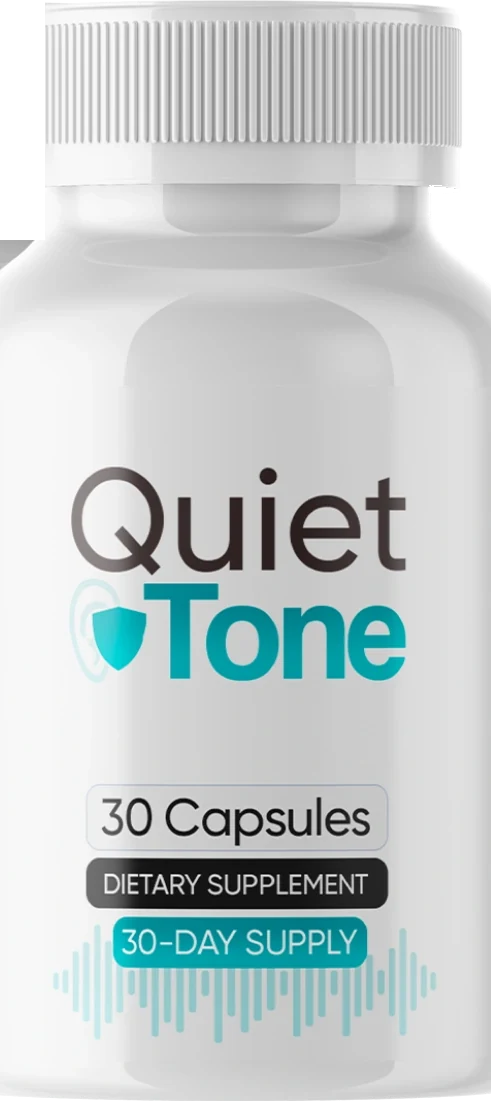
Which salt is on the Quiet Tone panel
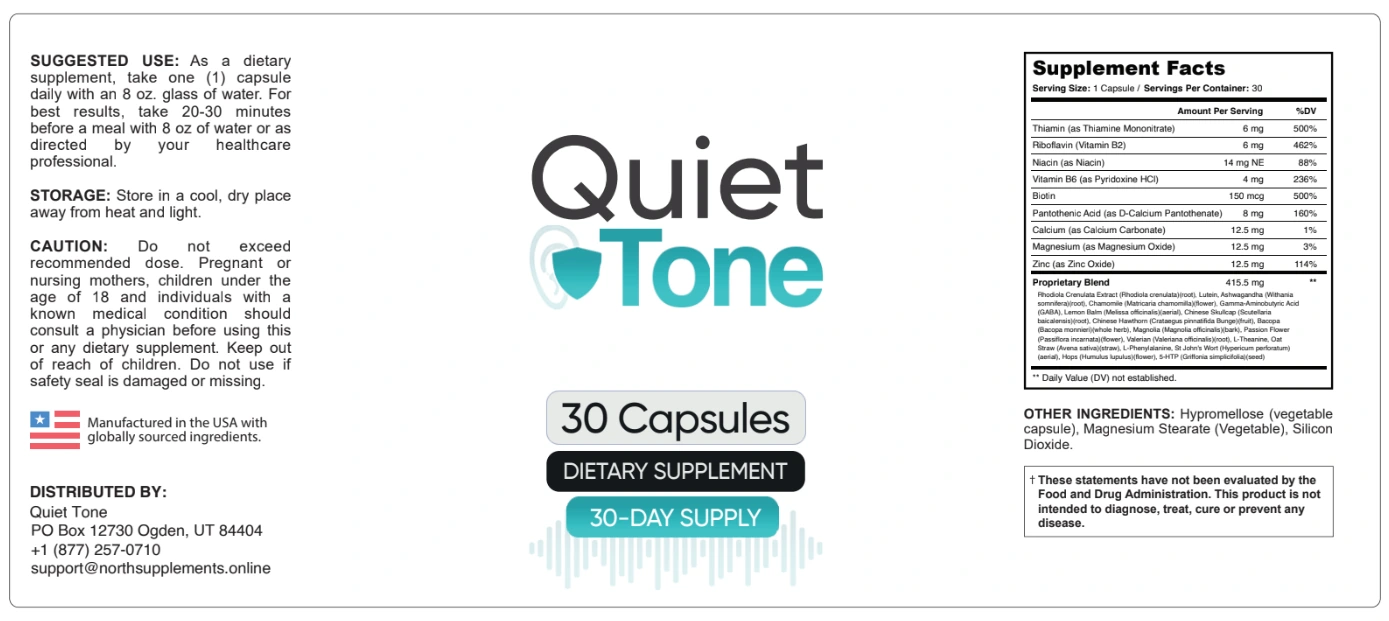
Zinc oxide, at 12.5 mg and 114% of a Daily Value, alongside magnesium oxide and calcium carbonate. Three cheap salts in a row, printed plainly, which is how this site was able to check them.
Two bottles $158 · six bottles $294 · 180-day money-back guarantee
Order Quiet Tone On The Official WebsiteOne capsule a day · 30 per bottle · lot QUI-26/QU-5380
Why oxide is on so many panels
Cost, and it is not a secret. Zinc oxide is the cheapest common zinc source by a comfortable margin, and on a multi-ingredient panel with twenty or thirty rows, the cost per row is the constraint the whole formulation is built around.
There is a second, less cynical reason. Oxide is dense in elemental zinc, so a smaller physical amount of powder delivers the printed figure. On a single-capsule product where everything has to fit inside one shell, that matters.
How to read a panel that uses it
As a signal rather than a verdict. A label using oxide and carbonate throughout is a label built to a price, which tells a buyer something about where the budget went and nothing about whether the product is any good for its stated purpose.
A label that uses citrate, bisglycinate or picolinate has spent more per row, and that is worth noticing in the other direction. Neither observation settles a purchase on its own.
The same story, in magnesium
Zinc is the clearest example but not the only one. A 2024 comparison of magnesium sources places magnesium oxide at the bottom of its absorption list, with citrate, malate and the glycinate forms ahead of it.
Magnesium oxide has one property that keeps it on shelves regardless: poorly absorbed magnesium stays in the gut and draws water into it, which is why it works as a laxative. A supplement using oxide for a magnesium contribution is using the form least suited to that job, and the fact is well documented rather than controversial.
Calcium carbonate is the third member of the cheap-salt family and turns up beside the other two on the same kinds of panel. At small amounts it is more of a tablet-forming ingredient than a meaningful contribution to intake.
What the salt does not change
Here is where an article about absorption has to be careful, because the subject invites a particular kind of overreach.
A better-absorbed salt delivers more of the mineral. It does not make the mineral do something it does not do. The Cochrane review of oral zinc for tinnitus pooled three randomised trials in 209 adults and found no evidence of benefit, and the clinical practice guideline names zinc specifically in its recommendation against dietary supplements for persistent bothersome tinnitus. Neither finding would change if the trials had used citrate.
- Absorption changes how much reaches the bloodstream, not what happens once it is there.
- A null result at a given dose is a null result regardless of the salt that delivered it.
- Choosing a better salt is a reason to expect better nutrient delivery, not a reason to expect a different outcome for an unrelated symptom.
- The honest framing is that salt choice is a quality signal about a formulation, and a modest one.
Why the percent Daily Value can mislead here
A percent Daily Value compares a printed amount against a reference intake. It is calculated from the figure on the panel, and it takes no account of the salt.
So two panels both printing 12.5 mg of zinc will both print 114%, whether the bracket says oxide or citrate. The percentage is arithmetic on a label rather than a measurement of what a body receives, and that distinction is worth holding onto whenever a large percentage is being used as a selling point.
The general lesson for reading any panel
Read the column of percentages top to bottom and a pattern usually appears: the largest percentages sit against the cheapest ingredients. Water-soluble B vitamins reach several hundred per cent for a fraction of a cent, and minerals in cheap salts reach a hundred per cent for not much more.
None of that is dishonest. It does mean a panel can look generous at a glance while the expensive part of the formula sits unquantified somewhere further down.
Five things to check on any mineral row
- Read the bracket. It names the salt, and it is on every compliant panel.
- Recognise the cheap trio. Oxide, carbonate and the commonest sulphates are the budget forms.
- Check whether the whole panel uses them. One cheap salt is a choice; four is a pattern.
- Ignore the percentage when comparing salts. It is calculated from the printed figure and knows nothing about absorption.
- Ask what the row is for. A nutrient contribution and a therapeutic dose are different jobs, and the second one is much harder to reach from a multi-ingredient panel.
Five checks, about two minutes, and they work on any label in any aisle. The bracket is the most informative thing on a mineral row and it is printed in the smallest type on the panel, which tells its own story.
References
- Wegmüller R, Tay F, Zeder C, Brnic M, Hurrell RF. Zinc absorption by young adults from supplemental zinc citrate is comparable with that from zinc gluconate and higher than from zinc oxide. J Nutr. 2014;144(2):132-6. Zinc oxide 49.9% absorbed versus 61.3% for citrate at a 10 mg dose; three of fifteen adults absorbed little or none from the oxide. PMID 24259556. https://pubmed.ncbi.nlm.nih.gov/24259556/
- Devarshi PP, Mao Q, Grant RW, Hazels Mitmesser S. Comparative absorption and bioavailability of various chemical forms of zinc in humans: a narrative review. Nutrients. 2024;16(24):4269. PMID 39770891. https://pubmed.ncbi.nlm.nih.gov/39770891/
- Person OC, Puga ME, da Silva EM, Torloni MR. Zinc supplementation for tinnitus. Cochrane Database Syst Rev. 2016;11(11):CD009832. Three trials, 209 adults; no evidence of benefit, all outcomes very low-certainty. PMID 27879981. https://pubmed.ncbi.nlm.nih.gov/27879981/
- Pajuelo D, Meissner JM, Negra T, Sanz-Serrano J, Elcoroaristizabal X. Comparative clinical study on magnesium absorption and side effects after oral intake of microencapsulated magnesium versus other magnesium sources. Nutrients. 2024;16(24):4367. PMID 39770988. https://pubmed.ncbi.nlm.nih.gov/39770988/
- Tunkel DE, Bauer CA, Sun GH, et al. Clinical practice guideline: tinnitus. Otolaryngol Head Neck Surg. 2014;151(2 Suppl):S1-S40. PMID 25273878. https://pubmed.ncbi.nlm.nih.gov/25273878/