Quiet Tone Official Website › Guides
GuidesHow To Choose A Hearing Supplement
Seven checks, fourteen points, and a threshold at ten.
Printed amounts, the largest trial dose against the blend total, species and plant part, mineral salts, the claim, published testing and the refund window. The method is then run against a real label, which scores seven.
A method rather than a shortlist, applied at the end to the product this website sells.
Why a scoring method beats a shortlist
Seven checks, in order of how much each one decides.
Every site in this category publishes a list of the best hearing supplements, and the ranking is always the same shape: the site's own product, then four it does not sell. A reader learns nothing from that except which bottle the site is paid for.
A method is different. Seven checks, applied in the same order to any label, produce a score the reader can recompute. If the method is sound it will sometimes fail the bottle the site sells, and this one does.
- Judging a label you are already looking at, rather than picking from a list somebody else wrote
- Separating the checks that are decisive from the ones that are merely reassuring
- Producing a number you can compare across two bottles
- Reaching a defensible answer without a laboratory, a subscription or a specialist
- Being applied to the product this website sells, in public, at the end
The seven are ordered by how much they decide. The first three are worth more than the last four put together, and anyone short of time can stop after check three with most of the value in hand.
The seven checks, in order
Seven checks, fourteen points, and a threshold at ten.
Check 1: is there an amount against each active?
The decisive one. A panel printing a weight against every ingredient can be compared against the research; a panel hiding them in a blend cannot. Score two points for every active quantified, one point for a blend of five or fewer members, zero for a blend of ten or more.
Check 2: does the largest single trial dose exceed the whole blend?
Take the biggest tested dose among the named ingredients and compare it with the blend total. If one ingredient's own trial used more than the entire blend weighs, the formula is not reproducing that trial. Score zero if it does, two if the blend comfortably exceeds it.
Check 3: does the label name the species and the plant part?
Valerian root and valerian leaf are different materials with different literatures; so are oat straw and oat grain. A binomial and a part is real information and a minority of labels supply it. Two points for both, one for the binomial alone, zero for common names only.
Check 4: what salts are the minerals in?
Oxide and carbonate are the cheap forms. The isotope study puts zinc oxide at 49.9% against 61.3% for citrate, and the magnesium comparison places oxide last. Two points for better-absorbed salts throughout, one for a mixture, zero for oxide and carbonate across the board.
Check 5: does the claim stay inside the evidence?
A hearing or tinnitus claim is not supported by the evidence in this category. Two points for a label making no claim at all, one for a claim about general wellbeing, zero for a claim about ringing or hearing.
Check 6: is anything published that can be read?
A certificate of analysis naming a laboratory, a method and a date is readable evidence. A reference number is not. Two points for a published document, one for a reference, zero for neither.
Check 7: how long is the refund window, and does it cover opened bottles?
The only check that is about commerce rather than chemistry, and it is last for that reason. A window long enough to outlast the trial lengths behind the ingredients, covering opened bottles, is worth two points. Thirty days on sealed bottles is worth zero.
Fourteen points available. Anything at ten or above is a thoughtfully assembled product by the standards of this aisle; anything below six is a list of names with a price on it.
The scoring is deliberately blunt. A finer scale would imply a precision this exercise does not have, and the purpose is to separate obviously different labels rather than to rank two similar ones.
The method applied to Quiet Tone, in public
Seven checks run against one real label, including the three it fails.
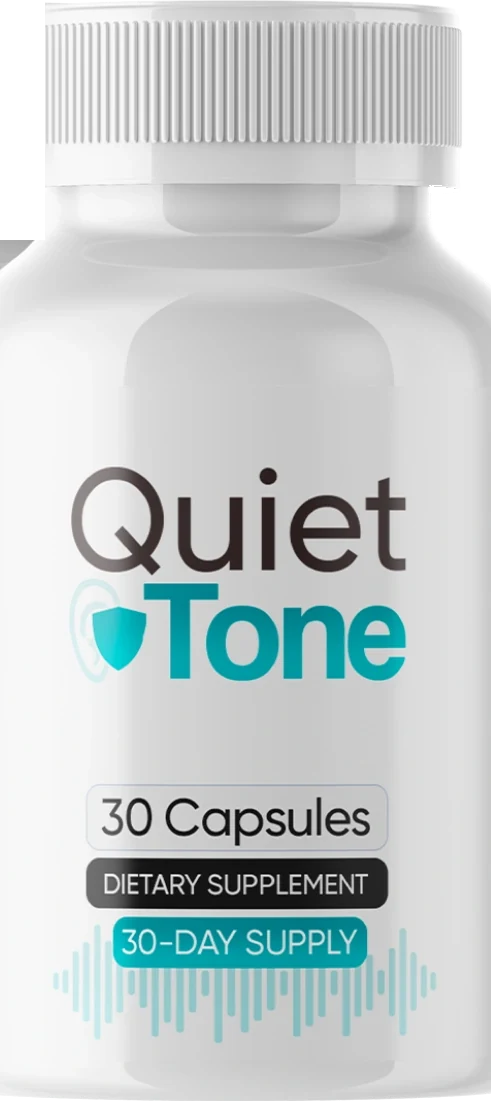
Here is the method run against the label this website sells, check by check, with the reasoning printed so anybody can disagree with a specific line rather than with the total.
| Check | Finding | Score |
|---|---|---|
| 1. Amounts against each active | 9 of 27 carry a weight and a percent Daily Value. The other 18 share one 415.5 mg row with nothing split out | 0 of 2 |
| 2. Largest trial dose against the blend total | Chamomile's own trial used 1,500 mg a day, more than three times the 415.5 mg blend that holds it and 17 others | 0 of 2 |
| 3. Species and plant part | Binomials and plant parts printed for most blend members: valerian as root, oat as straw, magnolia as bark, passion flower and St John’s wort as aerial parts | 2 of 2 |
| 4. Mineral salts | Zinc oxide, magnesium oxide and calcium carbonate. The three cheapest common forms, across the board | 0 of 2 |
| 5. Claim against evidence | The label carries no structure/function claim at all, which is the best possible answer to this check | 2 of 2 |
| 6. Readable published testing | A certificate reference (QUI-5380-26-QU) exists. No analytical document is published | 1 of 2 |
| 7. Refund window | 180 days from purchase, opened bottles included, on all three packs. Longer than every trial behind any plant in the blend | 2 of 2 |
Seven checks, fourteen points available, scored against the label artwork and the seller's own published terms.
Seven out of fourteen, which is below the threshold this guide set before looking. The three zeroes are all about dose and form, and they are the same defect stated three ways: this is a wide formula rather than a deep one, built to a price, with its botanical content undivided.
The three full marks are real and they are not consolation. A label that specifies plant parts and binomials is giving a reader more than most of this aisle does. A label that makes no claim at all is a rarity worth naming. And six months on opened bottles is the longest window in this category by a wide margin.
Three things this method deliberately does not score
Three popular criteria, and why counting them would make the score worse.
A scoring system is defined as much by what it excludes as by what it counts, so here are the three most obvious candidates and why none of them earned a check.
Customer reviews
They measure adherence and expectation rather than composition, they are published by the party selling the product, and they are the easiest thing on any listing to manufacture. A score that rewarded them would reward whoever collected the most, which is a marketing outcome rather than a formulation one.
Seals on the carton
A manufacturing seal describes a facility, an origin seal describes assembly and a money-back seal describes a commercial term. None reports a result. Check six asks for a readable document instead, which is the version of this question that can actually be answered.
Price
Price belongs in the buying decision rather than in the label assessment, and mixing the two produces a number that means nothing. Work out the score first, then put it beside the cost per day, which is a separate and simpler calculation.
One further exclusion is worth naming because it is the tempting one. The method does not score how many ingredients a formula contains. Length is the easiest thing for a seller to add and the least informative thing for a buyer to read, and check two already penalises a long list inside a small blend far more effectively than an ingredient count ever could.
What a score of seven out of fourteen actually means
Four things the score rewards and four things it penalises.
Not that the bottle is bad, and not that it is good. The method measures how interpretable a label is and how closely its amounts track the research, and a mid-table score means a formula that is honest about its composition and modest in its doses.
What the four points bought
- You can tell exactly which species and which plant part you are getting for most of the blend
- The nine printed nutrient rows are checkable against any reference table
- Nothing on the packaging claims an effect, so nothing has to be discounted
- The refund window outlasts every trial behind the ingredients, which makes the experiment reversible
What the seven missing points cost
- 18 members inside one 415.5 mg row means no member can be compared against its own research
- Three cheap mineral salts in a row is a formulation budget showing through
- A certificate reference without a document is a number rather than evidence
- The wide-and-shallow shape means a single-ingredient capsule would deliver more of any one plant for less money
Run the same seven checks on the next label you pick up. The exercise takes about ten minutes with a phone, and its value is comparative: a score means very little on its own and quite a lot beside a second one.
For the full working on this particular panel, the ingredients page takes all twenty-seven names one at a time and the panel page transcribes the document it is scored from.
Sources for this method
The absorption studies behind check four and the trial doses behind check two.
- Wegmüller R, Tay F, Zeder C, Brnic M, Hurrell RF. Zinc absorption by young adults from supplemental zinc citrate is comparable with that from zinc gluconate and higher than from zinc oxide. J Nutr. 2014;144(2):132-6. Zinc oxide 49.9% absorbed versus 61.3% for citrate at a 10 mg dose; three of fifteen adults absorbed little or none from the oxide. PMID 24259556. https://pubmed.ncbi.nlm.nih.gov/24259556/
- Devarshi PP, Mao Q, Grant RW, Hazels Mitmesser S. Comparative absorption and bioavailability of various chemical forms of zinc in humans: a narrative review. Nutrients. 2024;16(24):4269. PMID 39770891. https://pubmed.ncbi.nlm.nih.gov/39770891/
- Pajuelo D, Meissner JM, Negra T, Sanz-Serrano J, Elcoroaristizabal X. Comparative clinical study on magnesium absorption and side effects after oral intake of microencapsulated magnesium versus other magnesium sources. Nutrients. 2024;16(24):4367. PMID 39770988. https://pubmed.ncbi.nlm.nih.gov/39770988/
- Mao JJ, Xie SX, Keefe JR, Soeller I, Li QS, Amsterdam JD. Long-term chamomile (Matricaria chamomilla L.) treatment for generalized anxiety disorder: a randomized clinical trial. Phytomedicine. 2016;23(14):1735-1742. The trial dose was 1,500 mg a day, as 500 mg three times daily. PMID 27912875. https://pubmed.ncbi.nlm.nih.gov/27912875/
- Pakhale K, Salve J, Ademola J, et al. Safety of 8-week administration with ashwagandha (Withania somnifera) root extract in adults with stress and anxiety. Phytother Res. 2026;40(8):5005-5015. The trial dose was 600 mg a day in two divided doses, in 1,002 adults. PMID 41943502. https://pubmed.ncbi.nlm.nih.gov/41943502/
- Tiemtad P, Ingkaninan K, Temkitthawon P, et al. Comparative effects of Bacopa monnieri and Ginkgo biloba on cognitive functions: a systematic review and network meta-analysis. Phytomedicine. 2026;153:157915. Twenty-nine trials, 2,107 people; the working-memory benefit belonged to doses of 600 mg a day and above. PMID 41678913. https://pubmed.ncbi.nlm.nih.gov/41678913/
- Williams JL, Everett JM, D'Cunha NM, et al. The effects of green tea amino acid L-theanine consumption on the ability to manage stress and anxiety levels: a systematic review. Plant Foods Hum Nutr. 2020;75(1):12-23. The reviewed trials used 200-400 mg a day. PMID 31758301. https://pubmed.ncbi.nlm.nih.gov/31758301/
- Shinjyo N, Waddell G, Green J. Valerian root in treating sleep problems and associated disorders — a systematic review and meta-analysis. J Evid Based Integr Med. 2020;25:2515690X20967323. Sixty studies, 6,894 participants. PMID 33086877. https://pubmed.ncbi.nlm.nih.gov/33086877/
- Wong RH, Howe PR, Bryan J, Coates AM, Buckley JD, Berry NM. Chronic effects of a wild green oat extract supplementation on cognitive performance in older adults: a randomised, double-blind, placebo-controlled, crossover trial. Nutrients. 2012;4(5):331-42. At 1,500 mg a day for twelve weeks there was no effect on any measure of cognition. PMID 22690320. https://pubmed.ncbi.nlm.nih.gov/22690320/
- Li S, Sutanto CN, Xia X, Kim JE. The impact of 5-hydroxytryptophan supplementation on cognitive function and mood in Singapore older adults: a randomized controlled trial. Nutrients. 2025;17(17):2773. The trial dose was 100 mg a day for twelve weeks. PMID 40944161. https://pubmed.ncbi.nlm.nih.gov/40944161/
- Tunkel DE, Bauer CA, Sun GH, et al. Clinical practice guideline: tinnitus. Otolaryngol Head Neck Surg. 2014;151(2 Suppl):S1-S40. PMID 25273878. https://pubmed.ncbi.nlm.nih.gov/25273878/
- Person OC, Puga ME, da Silva EM, Torloni MR. Zinc supplementation for tinnitus. Cochrane Database Syst Rev. 2016;11(11):CD009832. Three trials, 209 adults; no evidence of benefit, all outcomes very low-certainty. PMID 27879981. https://pubmed.ncbi.nlm.nih.gov/27879981/
- Alsawadi A. The perception filler: a proposed conceptual framework for ingredient-interpretation gaps in food supplements. J Nutr. 2026;156(10):101803. PMID 42660500. https://pubmed.ncbi.nlm.nih.gov/42660500/
- Roe AL, Krzykwa J, Calderón AI, et al. Developing a screening strategy to identify hepatotoxicity and drug interaction potential of botanicals. J Diet Suppl. 2025;22(1):162-192. PMID 39450425. https://pubmed.ncbi.nlm.nih.gov/39450425/
Order Quiet Tone, or score another label first
Seven out of fourteen on this method: full marks for plant parts, for making no claim and for a 180-day window, and three zeroes on dose and form.
Two bottles $158 · six bottles $294 · 180-day money-back guarantee
Order Quiet Tone On The Official WebsiteOne capsule a day · 30 per bottle · lot QUI-26/QU-5380