Quiet Tone Official Website › Guides
GuidesA Guide To The Hearing Supplement Aisle
Hearing supplements are mostly calm-and-sleep botanicals with a vitamin half, and the one ingredient ever tested against ringing failed that test.
The clinical practice guideline covering the condition recommends against dietary supplements for it. What remains answerable is what these bottles contain, and this guide is about reading that.
Written about the category rather than about a bottle, and about ninety per cent of it applies to any label on the shelf.
What the hearing supplement aisle is built on
One guideline, one umbrella review, and the sentence they share.
Start with the fact that governs everything else, because a guide that saves it for the end is not a guide.
Ringing in the ears is a symptom rather than a disease. It accompanies age-related hearing loss, noise damage, earwax, some medicines, jaw problems and occasionally something that needs urgent attention. The step that distinguishes those is a hearing assessment.
The 2014 clinical practice guideline that governs this condition in the United States recommends AGAINST ginkgo, melatonin, zinc or other dietary supplements for persistent, bothersome tinnitus. Its executive summary says the same thing in shorter form. A 2026 umbrella review of every tinnitus intervention with a meta-analysis behind it maps where the effective approaches actually sit, and they are sound-based management, cognitive approaches and correcting a hearing loss where one exists.
- No supplement in it is a treatment for ringing in the ears, and no label in it is permitted to say otherwise
- The category exists because the condition is common, distressing and imperfectly served by the interventions that do work
- That is a real gap and it is not a dishonest one to sell into, provided nobody pretends the gap has been closed
- An audiogram costs a morning and identifies what is behind a symptom, which no capsule can do
- Everything below is about what these bottles actually contain, which is a different and more answerable question
The rest of this guide takes that as settled and moves on to the interesting part: what is genuinely inside these products, what those ingredients were really studied for, and how to tell a thoughtfully assembled formula from a list.
Zinc: the one ingredient that was actually tested
Three trials, 209 adults, and the finding that reframes the aisle.
Almost every bottle in this aisle carries zinc, and it is the only common ingredient with a tinnitus trial behind it as a single agent. That makes it the most informative row on any of these labels, for a reason most buyers would not guess.
The Cochrane review pooled three trials in 209 adults and found no evidence that oral zinc improves tinnitus symptoms. The guideline above names zinc specifically in its recommendation against supplements. So the one ingredient in this category that was tested for the use case is the one ingredient known not to work for it.
That is worth holding onto, because it reframes what the rest of a hearing formula is doing. If the tested ingredient failed, the untested ones are not a reason for optimism; they are simply untested.
| Zinc salt | Relative absorption | Typical use |
|---|---|---|
| Zinc citrate | 61.3% in the isotope study | The better-absorbed common option |
| Zinc gluconate | 60.9% in the same study | Common in lozenges |
| Zinc oxide | 49.9% in the same study | The cheapest, and the most common on multi-ingredient panels |
Figures from the stable-isotope comparison. A review of zinc forms sets out the wider picture.
The salt is worth checking on any panel that carries zinc, and not because it changes the tinnitus answer. It changes how much of a stated milligram figure a body actually receives, which matters for zinc as a nutrient regardless of why the bottle was bought.
The practical reading: a label printing zinc oxide is printing the cheap form. That is not a scandal, and it is a small signal about where the formulation budget went.
The calm-and-sleep plants, which are most of what is actually in the bottle
Seven plants, the dose each was studied at, and the number that decides whether a label matches it.
Open a hearing supplement and the ingredient list is usually dominated by botanicals whose human evidence sits in stress, sleep and mood. Ashwagandha, chamomile, valerian, passion flower, lemon balm, hops, GABA, L-theanine and 5-HTP recur across the aisle.
That is not a trick, and the reasoning behind it is defensible. Ringing is more intrusive when someone is tired, wound up or lying awake, and the distress a symptom causes is a legitimate target even when the symptom itself is not moving. What matters is whether a label carries those plants at the amounts their own research used.
| Plant | The dose its own trials ran at | What was measured |
|---|---|---|
| Chamomile | 1,500 mg a day, as 500 mg three times | Generalised anxiety, over eight weeks |
| Ashwagandha | 600 mg a day in two divided doses | Safety and tolerability in 1,002 adults; a second trial used 300 mg twice daily |
| Bacopa | 600 mg a day and above | Working memory, across 29 trials in a network meta-analysis |
| L-theanine | 200 to 400 mg a day | Stress and sleep measures across the reviewed trials |
| Valerian | Pooled across 60 studies and 6,894 people | Sleep quality; an umbrella review summarises |
| 5-HTP | 100 mg a day for twelve weeks | Mood measures in the most recent controlled trial |
| Oat straw | 800 to 1,600 mg as a single dose | Acute cognition; twelve weeks at 1,500 mg moved nothing |
Every figure here is the amount a published trial used, read from the paper's own abstract. None of them is a recommendation.
Print that table beside a label and one number decides everything: the total weight of the blend those plants sit in. A formula carrying 1,500 mg of chamomile is doing what the chamomile research did. A formula carrying 400 mg of everything combined is doing something else, whatever the names on the panel suggest.
That comparison is the single most useful thing a buyer can do in this aisle, it needs no laboratory, and the next section is about the labelling practice that most often prevents it.
Proprietary blends, and how to read one honestly
Two things a blend row tells you, one thing it never will, and the subtraction that settles it.
A proprietary blend is a single weight covering several ingredients, with no individual amounts printed. It is legal, it is extremely common in this aisle, and it is the single biggest obstacle to judging a formula.
Two things a blend row does still tell you, and they are worth more than most buyers realise.
The total weight is real
Whatever the blend contains, it contains no more than the printed total. So a 415 mg blend cannot hold the 1,500 mg of chamomile that chamomile's own trial used, or the 600 mg of ashwagandha from the safety trial, or both. That subtraction needs no further information and it is usually decisive.
The order is descending by weight
Under US labelling rules the members of a blend appear in descending order of weight. So the first name weighs at least as much as the second, and the last name weighs least. It does not give a figure for any of them, and no arithmetic beyond that ordering is available.
Everything else is unavailable
A site that prints an estimated milligram figure for a blend member has invented it. Work on how supplement labels are actually read keeps finding the same thing: readers assume a named ingredient is present at a meaningful amount, and a blend is what makes that assumption unfalsifiable.
The proportionate response is not to refuse every product with a blend, which would exclude most of the aisle. It is to do the subtraction. Take the blend total, take the number of members, and compare it against the largest single-ingredient trial dose in the table above. If one tested dose exceeds the entire blend, the formula is doing something other than reproducing that trial.
Plant parts are the other thing worth checking, and a minority of labels specify them. Valerian root and valerian leaf are different materials; oat straw and oat grain are different materials. A label that names the part is giving you information that most of its competitors withhold, and that is a genuine mark in its favour.
The vitamin half, and why the percentages are so large
Why 500% is cheaper than it looks, and the one row with a real consequence.
Alongside the botanicals, most bottles in this aisle carry a set of B vitamins and two or three minerals, often at percentages of a Daily Value that look extraordinary: 500%, 462%, 236%. Those figures deserve a paragraph rather than a glance.
A percent Daily Value compares an amount against a reference intake for an adult. It is a nutritional yardstick and not a measure of potency. Several B vitamins are water soluble, cheap and very safe at multiples of their reference, so a panel can reach 500% for a fraction of a cent.
| What a large percentage usually means | What it does not mean |
|---|---|
| A cheap, water-soluble nutrient at a multiple of its reference intake | That the formula is unusually potent |
| A visible number on a panel that costs almost nothing to print | That the ingredient was chosen for the use case |
| Occasionally something with a real consequence, like biotin | That every large percentage is equally inert |
Read a %DV column top to bottom and the percentages are usually highest where the ingredient costs least.
The biotin row is the exception worth knowing about on any panel in any aisle. Biotin at supplement intakes interferes with laboratory immunoassays, and time-critical analytes including troponin are affected. It is a laboratory problem rather than a health one, and the response is to say what you take before a blood draw.
The mineral rows carry their own tell, which is the salt. Magnesium oxide and calcium carbonate are the cheap forms, and a 2024 comparison of magnesium sources places oxide at the bottom of its absorption list. A panel using oxide and carbonate throughout is a panel built to a price, which is ordinary and is worth noticing.
The two ingredients in this aisle that genuinely interact
Two ingredients, four drug classes and a liver signal, each with its published record.
Most of what is sold here is benign at the amounts involved. Two ingredients are not, and both turn up regularly in calm-and-sleep blends without a word of warning on the front of the box.
St John’s wort
The most interaction-prone botanical sold in the United States. It induces CYP3A4 and lowers blood levels of many prescription medicines. The documented consequences include reduced contraceptive hormone levels with breakthrough bleeding, gathered in a systematic review, and transplant rejection through loss of ciclosporin levels. NCCIH carries the plain summary.
5-HTP
A direct serotonin precursor. Serotonin syndrome has been reported where it is combined with serotonergic medicines, and the review literature sets out the background. Anyone on an antidepressant has a specific question to ask rather than a general caution to absorb.
Two further notes belong here. The herbal sedative literature finds additive sedation the expected direction when these plants meet alcohol, prescription sedatives or antihistamines. And a DILIN case series together with a series from India record rare, reversible liver injury with ashwagandha at single-ingredient therapeutic doses, which NCCIH summarises.
None of that makes the category dangerous. It makes it a category where reading the ingredient list before the first capsule is worth five minutes, particularly for anyone holding a prescription.
What a good label in this aisle looks like
Five marks in favour, five against, applied to a real label in the next guide.
Pulling the above together into something a reader can carry into a shop or a search result.
Marks in a label’s favour
- Amounts printed against every active, or a blend total small enough in members to be interpretable
- Plant parts specified, because root and leaf are different materials
- Binomials printed, so the species is not left to a common name
- Minerals in a better-absorbed salt where the panel can afford one
- A claim that stays inside what the evidence supports, or no claim at all
Marks against it
- A long ingredient list inside one small blend total, which is length standing in for dose
- A common name with no species and no plant part
- A benefit claim about hearing or ringing, which the evidence in this aisle does not support
- A seal wall presented as though it were a test result
- A proprietary blend with no member count and no total that makes sense
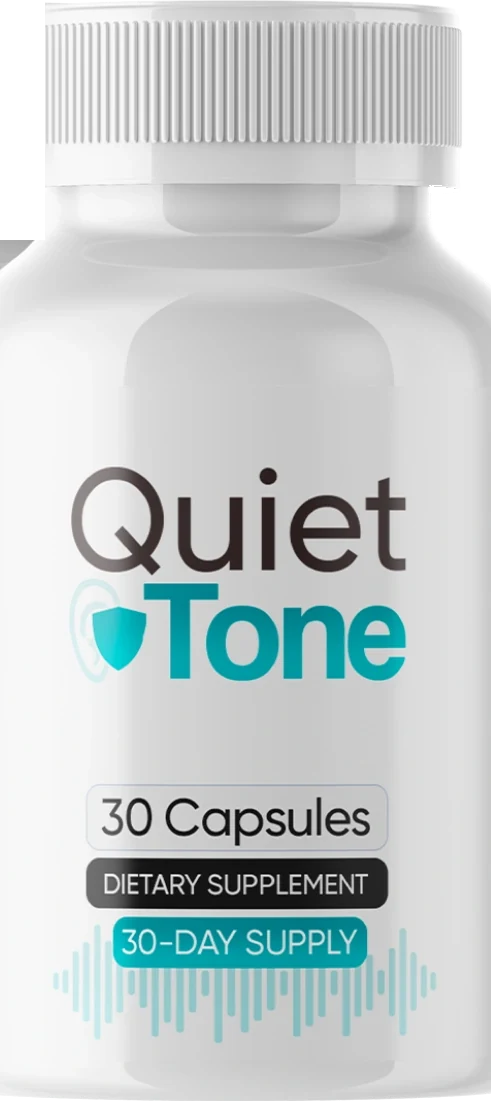
The bottle this website sells scores on both sides of that list, and the second guide puts a number on it. It specifies plant parts and binomials, which is more than most of this aisle bothers with. It also carries 18 members inside one 415.5 mg row, which is the defect this guide spends its longest section on.
Both of those are true at once, and a guide that only printed one of them would not be worth the reading time.
Sources for this guide
Every source cited above, in house order: the condition first, then the ingredients, then the safety literature.
- Tunkel DE, Bauer CA, Sun GH, et al. Clinical practice guideline: tinnitus. Otolaryngol Head Neck Surg. 2014;151(2 Suppl):S1-S40. PMID 25273878. https://pubmed.ncbi.nlm.nih.gov/25273878/
- Tunkel DE, Bauer CA, Sun GH, et al. Clinical practice guideline: tinnitus executive summary. Otolaryngol Head Neck Surg. 2014;151(4):533-41. PMID 25274374. https://pubmed.ncbi.nlm.nih.gov/25274374/
- Person OC, Puga ME, da Silva EM, Torloni MR. Zinc supplementation for tinnitus. Cochrane Database Syst Rev. 2016;11(11):CD009832. Three trials, 209 adults; no evidence of benefit, all outcomes very low-certainty. PMID 27879981. https://pubmed.ncbi.nlm.nih.gov/27879981/
- Chen K, Monaghan NP, Nguyen SA, et al. Outcomes of tinnitus interventions: an umbrella review of systematic reviews with meta-analysis. Ann Otol Rhinol Laryngol. 2026;135(5):342-355. PMID 41461570. https://pubmed.ncbi.nlm.nih.gov/41461570/
- Wegmüller R, Tay F, Zeder C, Brnic M, Hurrell RF. Zinc absorption by young adults from supplemental zinc citrate is comparable with that from zinc gluconate and higher than from zinc oxide. J Nutr. 2014;144(2):132-6. Zinc oxide 49.9% absorbed versus 61.3% for citrate at a 10 mg dose; three of fifteen adults absorbed little or none from the oxide. PMID 24259556. https://pubmed.ncbi.nlm.nih.gov/24259556/
- Devarshi PP, Mao Q, Grant RW, Hazels Mitmesser S. Comparative absorption and bioavailability of various chemical forms of zinc in humans: a narrative review. Nutrients. 2024;16(24):4269. PMID 39770891. https://pubmed.ncbi.nlm.nih.gov/39770891/
- Pajuelo D, Meissner JM, Negra T, Sanz-Serrano J, Elcoroaristizabal X. Comparative clinical study on magnesium absorption and side effects after oral intake of microencapsulated magnesium versus other magnesium sources. Nutrients. 2024;16(24):4367. PMID 39770988. https://pubmed.ncbi.nlm.nih.gov/39770988/
- Mao JJ, Xie SX, Keefe JR, Soeller I, Li QS, Amsterdam JD. Long-term chamomile (Matricaria chamomilla L.) treatment for generalized anxiety disorder: a randomized clinical trial. Phytomedicine. 2016;23(14):1735-1742. The trial dose was 1,500 mg a day, as 500 mg three times daily. PMID 27912875. https://pubmed.ncbi.nlm.nih.gov/27912875/
- Pakhale K, Salve J, Ademola J, et al. Safety of 8-week administration with ashwagandha (Withania somnifera) root extract in adults with stress and anxiety. Phytother Res. 2026;40(8):5005-5015. The trial dose was 600 mg a day in two divided doses, in 1,002 adults. PMID 41943502. https://pubmed.ncbi.nlm.nih.gov/41943502/
- West RE, Biswas A, Rao R, et al. A proprietary herbal extract of ashwagandha root for stress and anxiety in healthy adults: a randomized, double-blind, three-arm, placebo-controlled efficacy and safety study. J Med Life. 2026;19(1):49-62. The trial dose was 300 mg twice a day for eight weeks. PMID 41815853. https://pubmed.ncbi.nlm.nih.gov/41815853/
- Tiemtad P, Ingkaninan K, Temkitthawon P, et al. Comparative effects of Bacopa monnieri and Ginkgo biloba on cognitive functions: a systematic review and network meta-analysis. Phytomedicine. 2026;153:157915. Twenty-nine trials, 2,107 people; the working-memory benefit belonged to doses of 600 mg a day and above. PMID 41678913. https://pubmed.ncbi.nlm.nih.gov/41678913/
- Williams JL, Everett JM, D'Cunha NM, et al. The effects of green tea amino acid L-theanine consumption on the ability to manage stress and anxiety levels: a systematic review. Plant Foods Hum Nutr. 2020;75(1):12-23. The reviewed trials used 200-400 mg a day. PMID 31758301. https://pubmed.ncbi.nlm.nih.gov/31758301/
- Shinjyo N, Waddell G, Green J. Valerian root in treating sleep problems and associated disorders — a systematic review and meta-analysis. J Evid Based Integr Med. 2020;25:2515690X20967323. Sixty studies, 6,894 participants. PMID 33086877. https://pubmed.ncbi.nlm.nih.gov/33086877/
- Valente V, Machado D, Jorge S, et al. Does valerian work for insomnia? An umbrella review of the evidence. Eur Neuropsychopharmacol. 2024;82:6-28. PMID 38359657. https://pubmed.ncbi.nlm.nih.gov/38359657/
- Li S, Sutanto CN, Xia X, Kim JE. The impact of 5-hydroxytryptophan supplementation on cognitive function and mood in Singapore older adults: a randomized controlled trial. Nutrients. 2025;17(17):2773. The trial dose was 100 mg a day for twelve weeks. PMID 40944161. https://pubmed.ncbi.nlm.nih.gov/40944161/
- Kennedy DO, Jackson PA, Forster J, et al. Acute effects of a wild green-oat (Avena sativa) extract on cognitive function in middle-aged adults: a double-blind, placebo-controlled, within-subjects trial. Nutr Neurosci. 2017;20(2):135-151. Single doses of 800 mg and 1,600 mg; the effect sat at or below 800 mg. PMID 26618715. https://pubmed.ncbi.nlm.nih.gov/26618715/
- Wong RH, Howe PR, Bryan J, Coates AM, Buckley JD, Berry NM. Chronic effects of a wild green oat extract supplementation on cognitive performance in older adults: a randomised, double-blind, placebo-controlled, crossover trial. Nutrients. 2012;4(5):331-42. At 1,500 mg a day for twelve weeks there was no effect on any measure of cognition. PMID 22690320. https://pubmed.ncbi.nlm.nih.gov/22690320/
- Dasgupta A. Immunoassay design and biotin interference. Adv Clin Chem. 2022;109:165-183. PMID 35953126. https://pubmed.ncbi.nlm.nih.gov/35953126/
- Mrosewski I, Urbank M, Stauch T, Switkowski R. Interference from high-dose biotin intake in immunoassays for potentially time-critical analytes by Roche. Arch Pathol Lab Med. 2020;144(9):1108-1117. PMID 31944861. https://pubmed.ncbi.nlm.nih.gov/31944861/
- Alsawadi A. The perception filler: a proposed conceptual framework for ingredient-interpretation gaps in food supplements. J Nutr. 2026;156(10):101803. PMID 42660500. https://pubmed.ncbi.nlm.nih.gov/42660500/
- Markowitz JS, Donovan JL, DeVane CL, et al. Effect of St John's wort on drug metabolism by induction of cytochrome P450 3A4 enzyme. JAMA. 2003;290(11):1500-4. PMID 13129991. https://pubmed.ncbi.nlm.nih.gov/13129991/
- Murphy PA, Kern SE, Stanczyk FZ, Westhoff CL. Interaction of St. John's wort with oral contraceptives: effects on the pharmacokinetics of norethindrone and ethinyl estradiol, ovarian activity and breakthrough bleeding. Contraception. 2005;71(6):402-8. PMID 15914127. https://pubmed.ncbi.nlm.nih.gov/15914127/
- Berry-Bibee EN, Kim MJ, Tepper NK, Riley HE, Curtis KM. Co-administration of St. John's wort and hormonal contraceptives: a systematic review. Contraception. 2016;94(6):668-677. PMID 27444983. https://pubmed.ncbi.nlm.nih.gov/27444983/
- Ernst E. St John's wort supplements endanger the success of organ transplantation. Arch Surg. 2002;137(3):316-9. PMID 11888457. https://pubmed.ncbi.nlm.nih.gov/11888457/
- National Center for Complementary and Integrative Health. St. John's Wort. National Institutes of Health. Read 19 September 2026. https://www.nccih.nih.gov/health/st-johns-wort
- de Dios I, Rialp G, Franco S, Romero M, Ortega M, Nieto Y. The role of chronic nutritional supplements consumption in a fulminant serotonin syndrome due to citalopram intoxication. Med Intensiva (Engl Ed). 2019;43(9):582-583. PMID 29317102. https://pubmed.ncbi.nlm.nih.gov/29317102/
- Turner EH, Loftis JM, Blackwell AD. Serotonin a la carte: supplementation with the serotonin precursor 5-hydroxytryptophan. Pharmacol Ther. 2006;109(3):325-38. PMID 16023217. https://pubmed.ncbi.nlm.nih.gov/16023217/
- Căuș MN, Lupoae M, Chițescu CL. Efficacy and safety of herbal supplements with anxiolytic, antidepressant, and sedative action: a review of clinical data and toxicological risks. Pharmaceuticals (Basel). 2026;19(3):337. PMID 41901246. https://pubmed.ncbi.nlm.nih.gov/41901246/
- Björnsson HK, Björnsson ES, Avula B, et al. Ashwagandha-induced liver injury: a case series from Iceland and the US Drug-Induced Liver Injury Network. Liver Int. 2020;40(4):825-829. PMID 31991029. https://pubmed.ncbi.nlm.nih.gov/31991029/
- Philips CA, Valsan A, Theruvath AH, et al. Ashwagandha-induced liver injury — a case series from India and literature review. Hepatol Commun. 2023;7(10):e0270. PMID 37756041. https://pubmed.ncbi.nlm.nih.gov/37756041/
- National Center for Complementary and Integrative Health. Ashwagandha. National Institutes of Health. Read 19 September 2026. https://www.nccih.nih.gov/health/ashwagandha
See how one label scores: Quiet Tone
A ten-row panel with plant parts and binomials printed, 18 members inside one 415.5 mg blend, and 180 days from purchase to change your mind.
Two bottles $158 · six bottles $294 · 180-day money-back guarantee
Order Quiet Tone On The Official WebsiteOne capsule a day · 30 per bottle · lot QUI-26/QU-5380